September 12, 2026 Detroit Night Shoot Itinerary
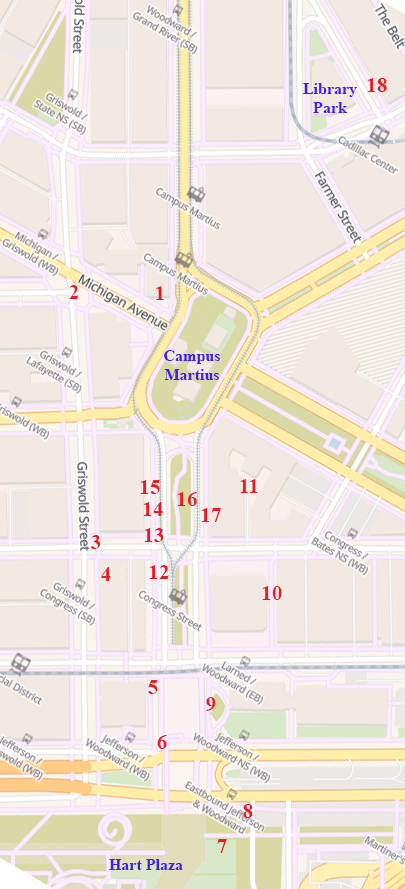
The clickable red numbers on the map below are the spots on the sidewalk where the numbered photos further down were made. These are all photos I (or Glen or Tom or my Ohio friends Marina and Chad) have taken while standing right where the number is placed on the map. I'm not saying these are spectacular photos you need to try to reproduce, or that these should even be your goals for the day, but I think we sometimes struggle with how to approach architectural photography. I've compiled these photos to suggest different points of view than you might typically use, which have worked well for me. They're an idea-book, a way to get into my head about how I try to get a photo that might be interesting. If you're not interested in this, then of course photograph whatever you'd like, even if there might be humans in them (that was a joke, people, actually no humans are permitted, oh gawd, an even wurst terrible joke).
Here are some of the things I look for when doing Architectral Photography which I'm illustrating with the photos from these 18 stops:
1001 Woodward: This photo was taken from as low as possible, about 6-inches off the ground, in front of a bench on the Michigan Avenue side of the building (the backrest of the bench is the wooden slats at the bottom). If you want to shoot this, you'll need to lay down on the ground for the photo, or else carry a tripod or mini-tripod or platypod or beanbag, in order to get so low.
9mm full frame, 6mm crop sensor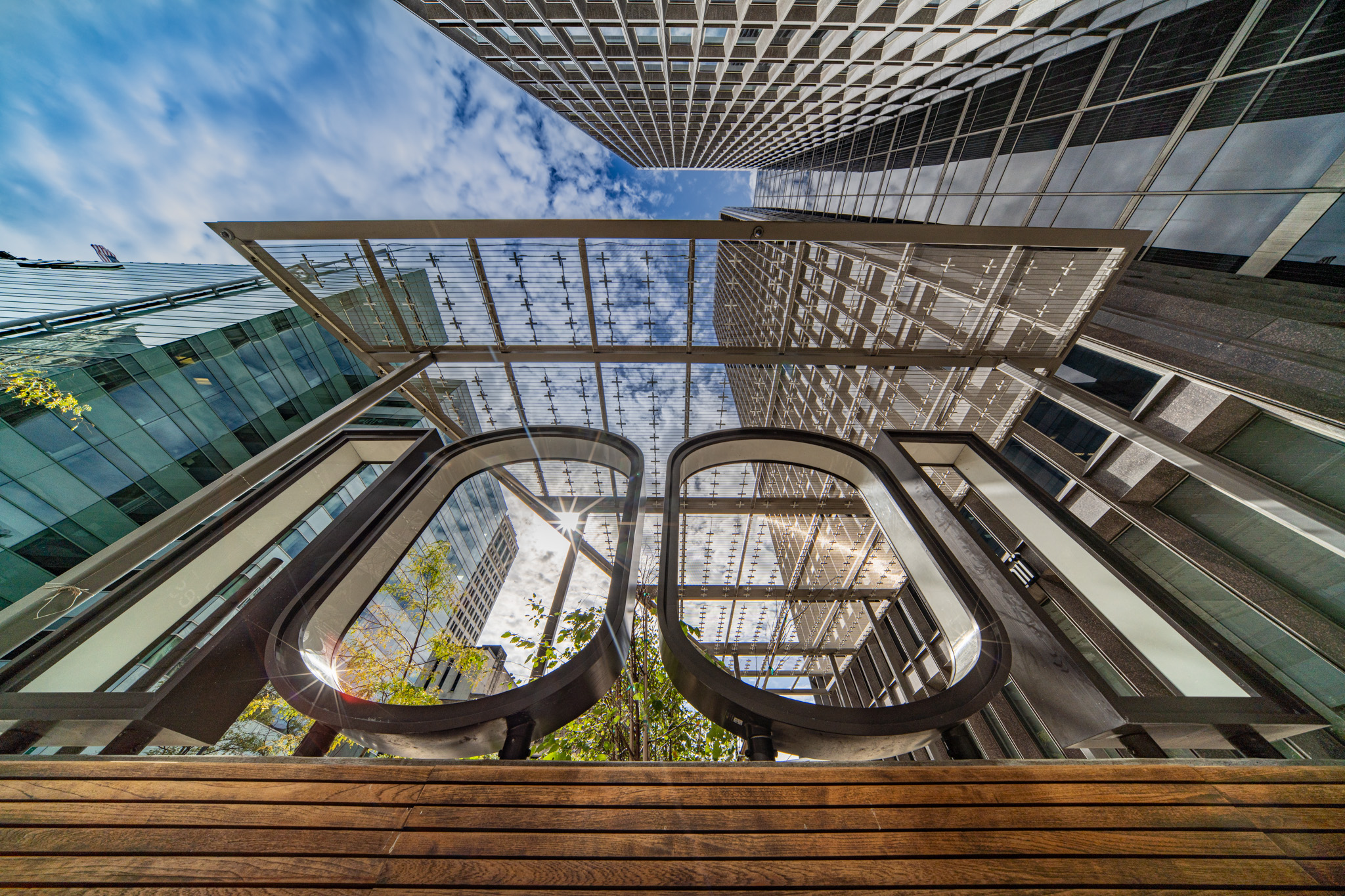
Lafayette and American Coney Island: This is not a very good photo of these establishments but is just here to remind you there's probably a photo op here. Blow me away and show me how it should be done with a great creative image. Maybe a great photo could be made as darkness approaches, as we walk back to Library Park after dinner.
70mm full frame, 58mm crop sensor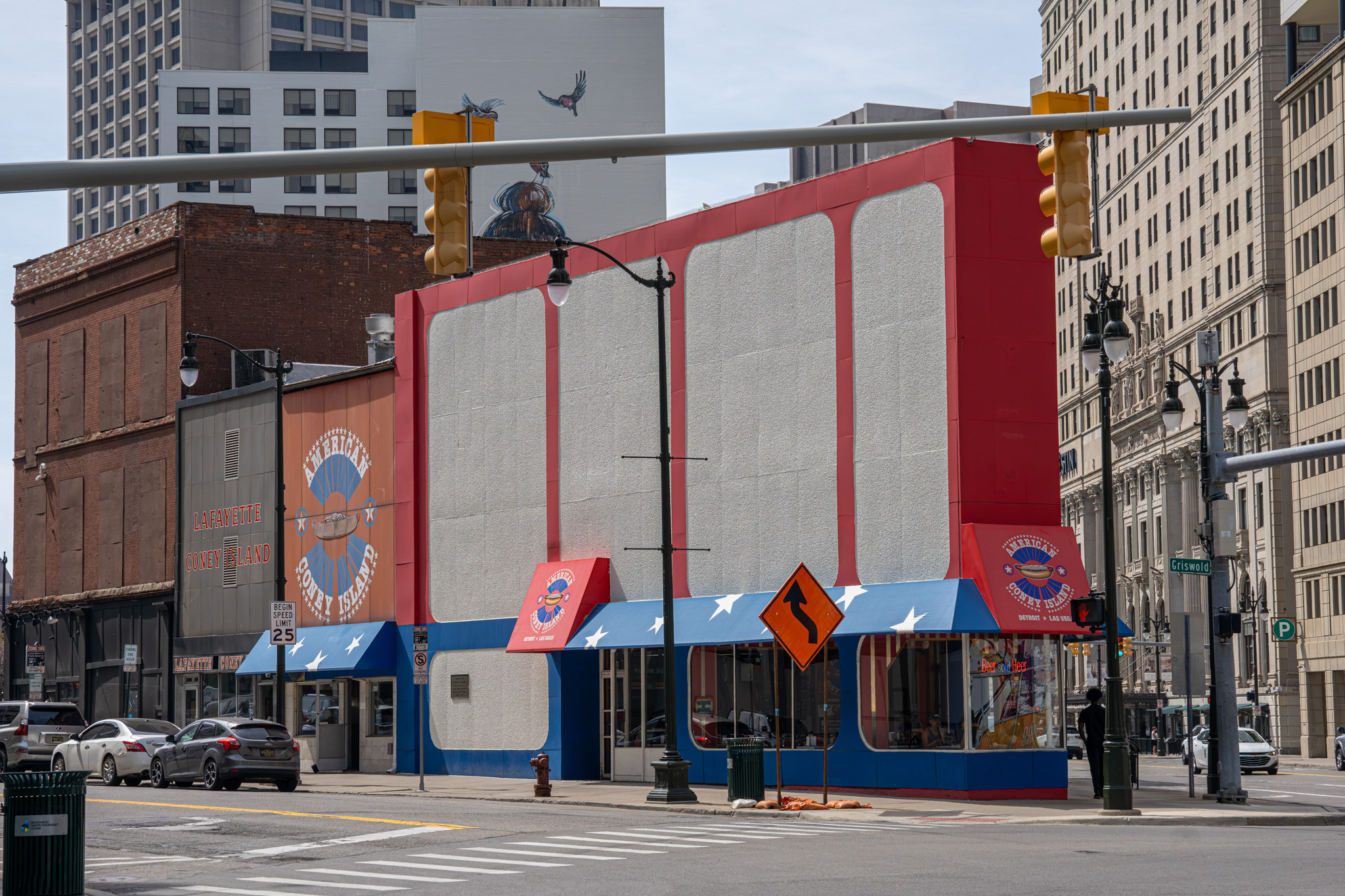
The top of the Greater Penobscot Building (the super-tall one) often appears as a jumble of cubes, as in the 1st photo below. But in the 2nd photo below, taken from this spot on Congress Street just east of Griswold, the symmetry of the angled 'steps' is apparent. The diagonally angled top of the Ford Building cuts into the lower-left part of the image to make a nice contrasting foreground element. I'd sure like to get that diagonal to slice the frame at the same angle as the steps of the Penobscot, though. I don't know whether that's possible.
70mm full frame, 47mm crop sensor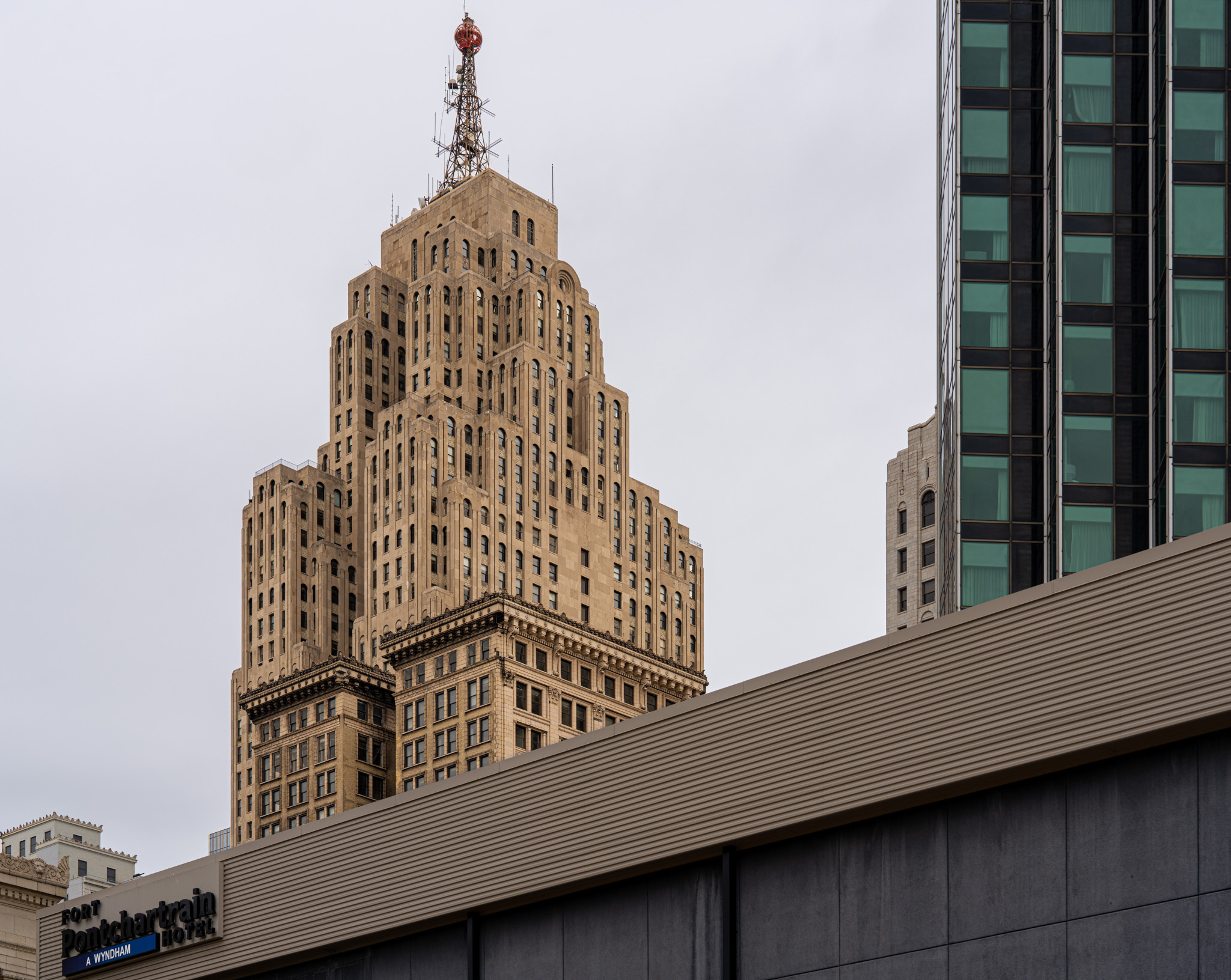 148mm full frame, 98mm crop sensor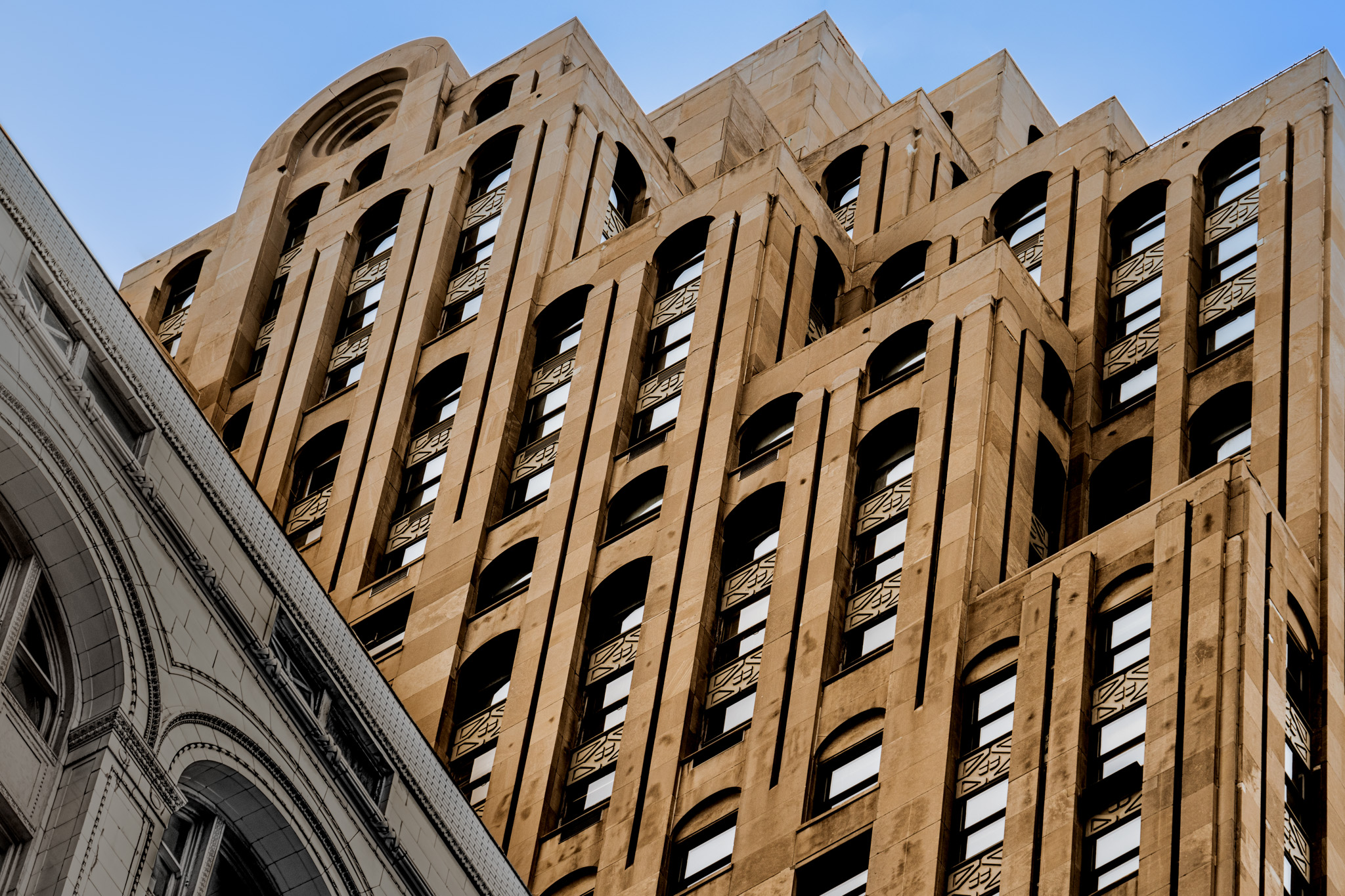
If you've never been inside the Guardian Building, you absolutely must walk inside today. The photo I'm featuring here is of one of the elevator alcoves, but there are a hundred other superb opportunities in the two huge colorful lobbies inside the building. If the photo I've chosen here doesn't float your boat, check out others I've photographed here.
21mm full frame, 14mm crop sensor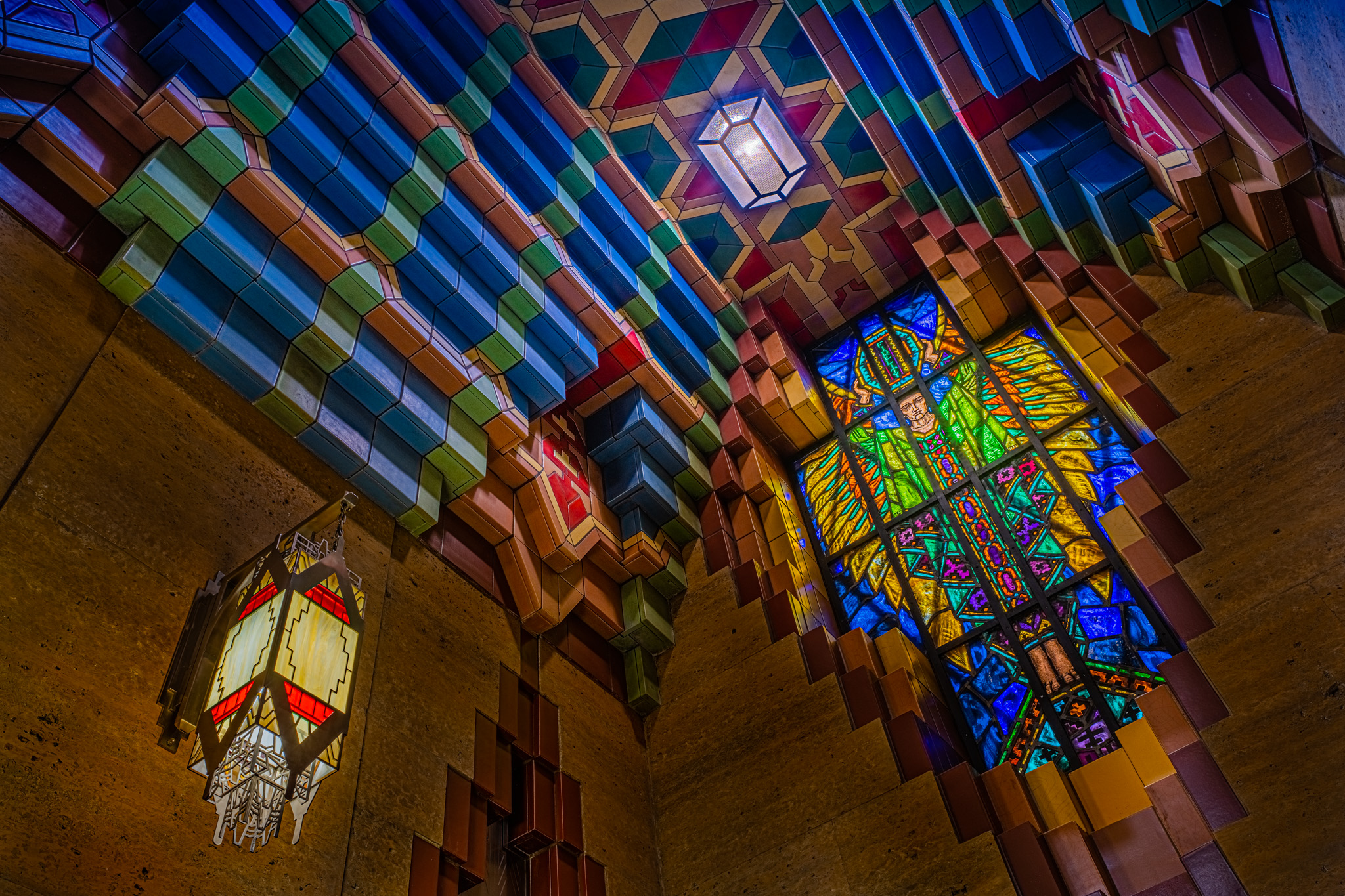
The white stairs and pillars of One Woodward Ave make a perfect frame around the People Mover, and the backdrop of the orange Guardian Buidling. If you're lucky enough to get a People Mover train with a contrasting color, perhaps blue, you'll easily beat this photo. (dang, why didn't I think of that at the time?)
15mm full frame, 10mm crop sensor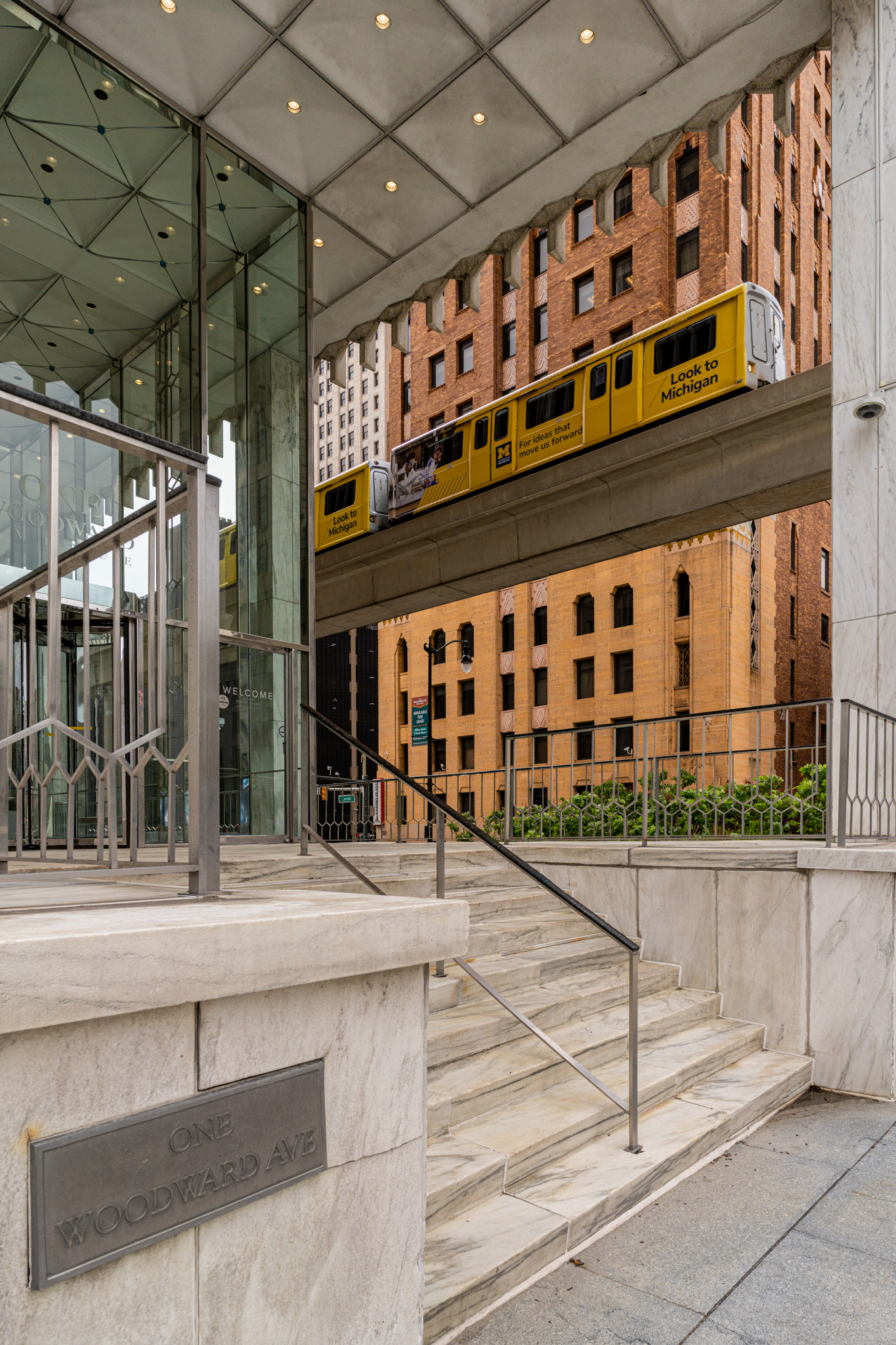
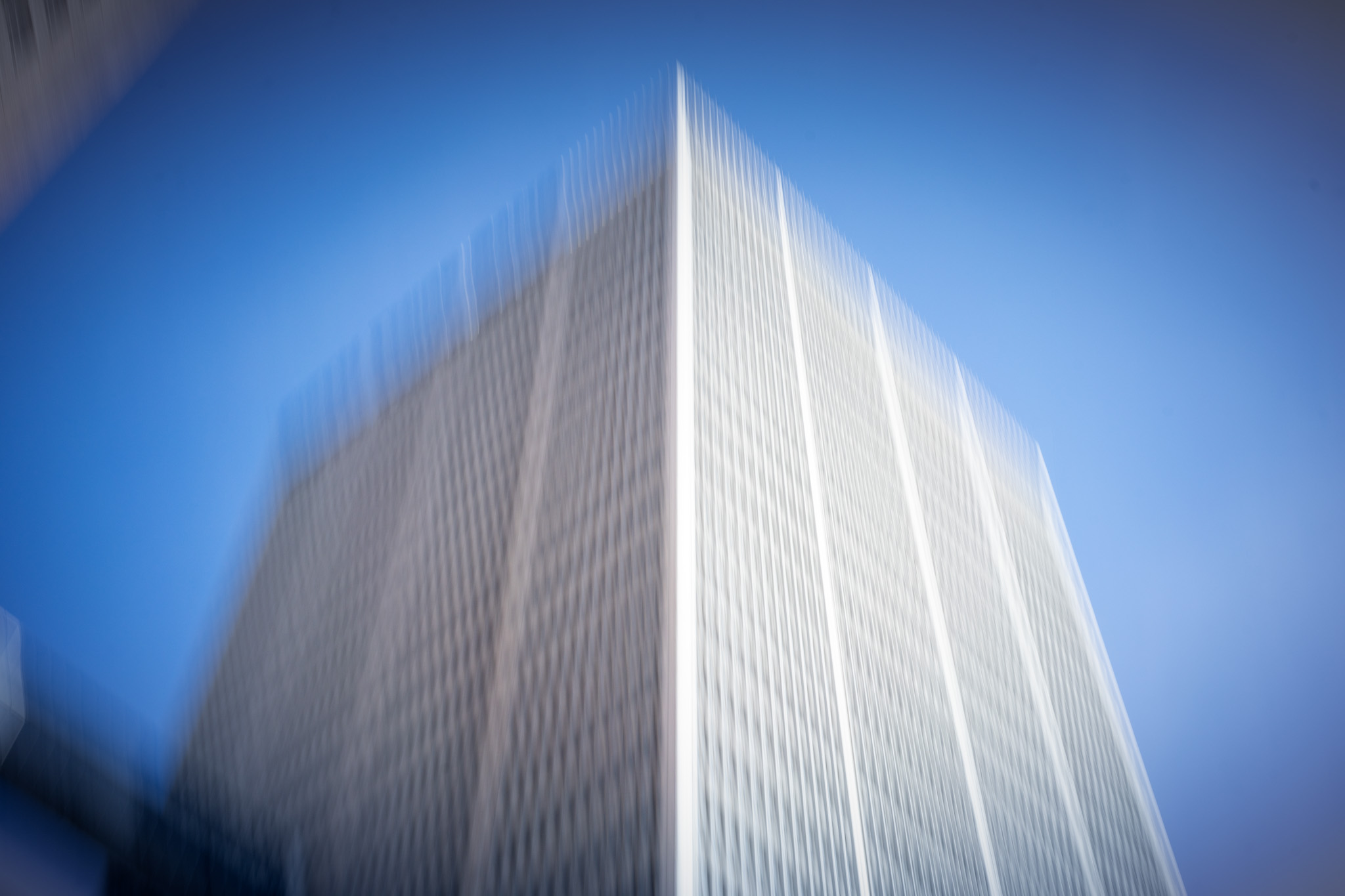
The bright white One Woodward Ave Building (once called the Michigan Consolidated Gas Building, then the Fifth Third Bank Building, but I prefer the simple One Woodward Ave). This building was designed by Minoru Yamasaki, the architect of the two original World Trade Center towers in Manhattan, and due to this being that architect's first skyscraper, this is often considered the forerunner of those similar-looking WTC buildings. It screams "vertical" so give it what it wants. Just set a fairly show shutter speed of 1/4 second, sweep upward as you press the shutter button, and adjust as required for your subsequent photos. A couple keys to panning shots are (1) pan in the dominant direction of your subject, (2) don't make the exposure long enough that all the detail is smeared out, (3) remaining detail within dreamlike motion is the key to a good image. And just so you know, a photo like this does not come straight out of the camera. The original photo is the 2nd below, which I cropped and developed into the first B&W photo below.
50mm full frame, 35mm crop sensor, but more important, 1/4 second exposure while panning upward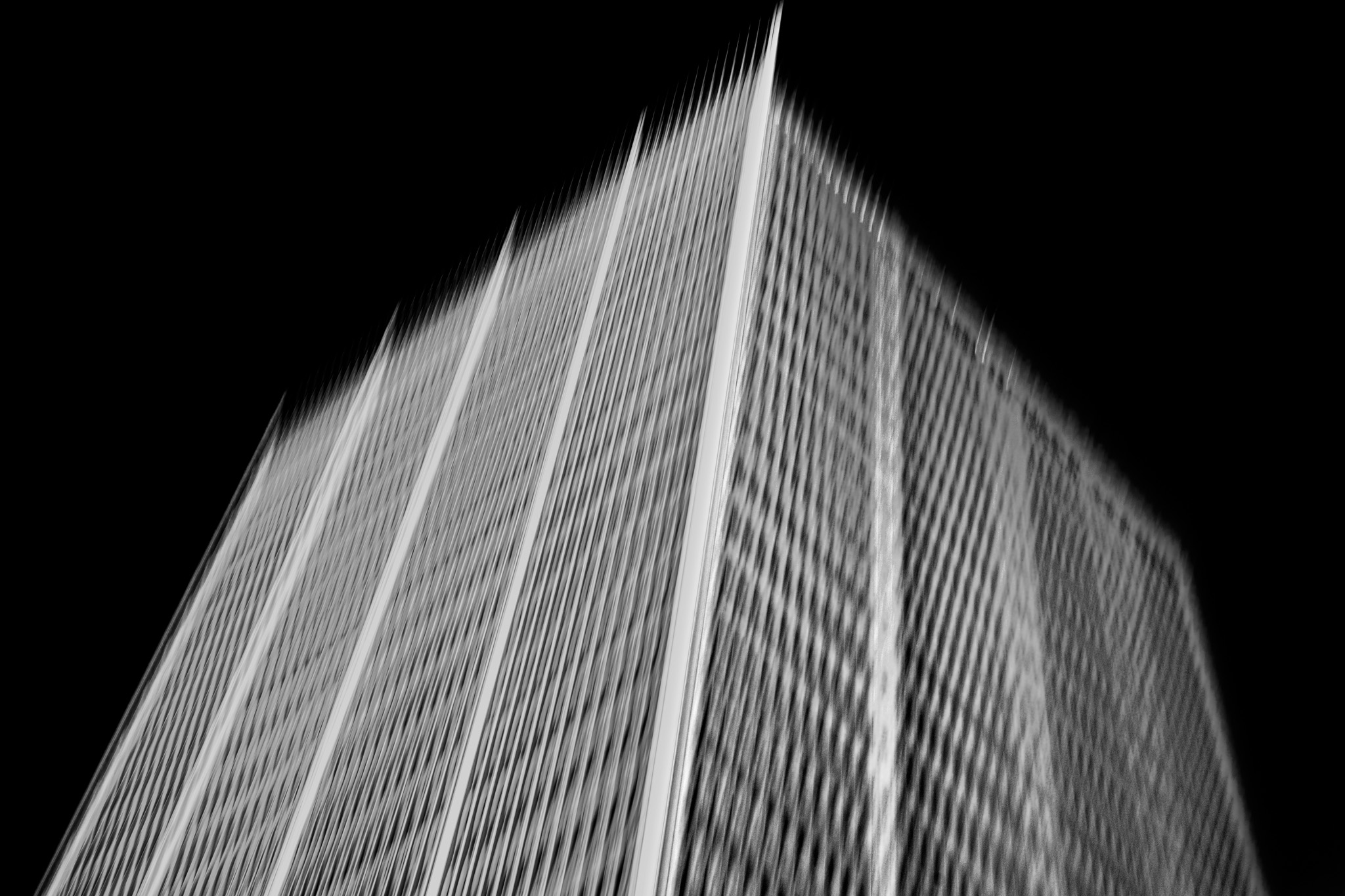
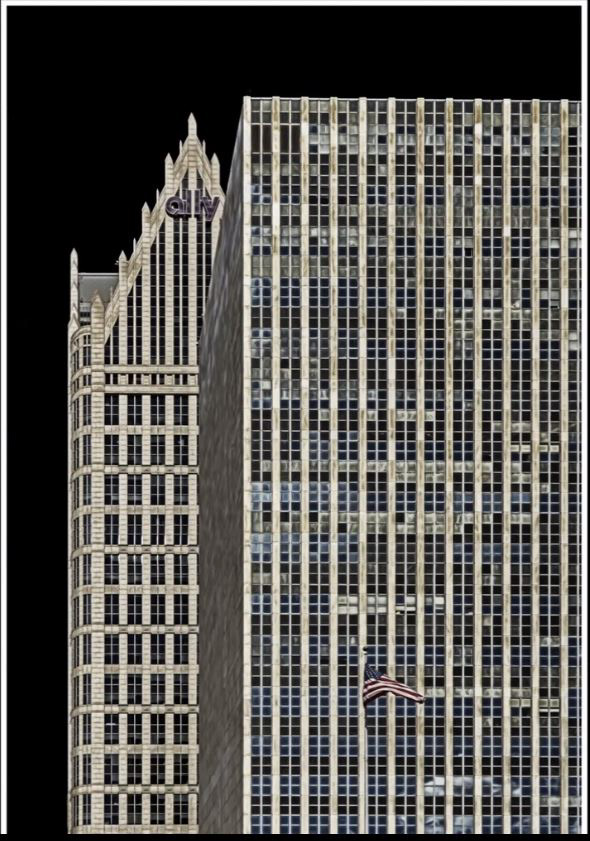
My friend from the Cleveland area, Marina Neyman, made this superb photograph from Hart Plaza of the Ally Building (One Detroit Center) behind the Coleman Young Municipal Building. To my eyes, she captured the perfect angle between the buildings that I have been unable to reproduce, but maybe you can succeed where I've thus far failed.
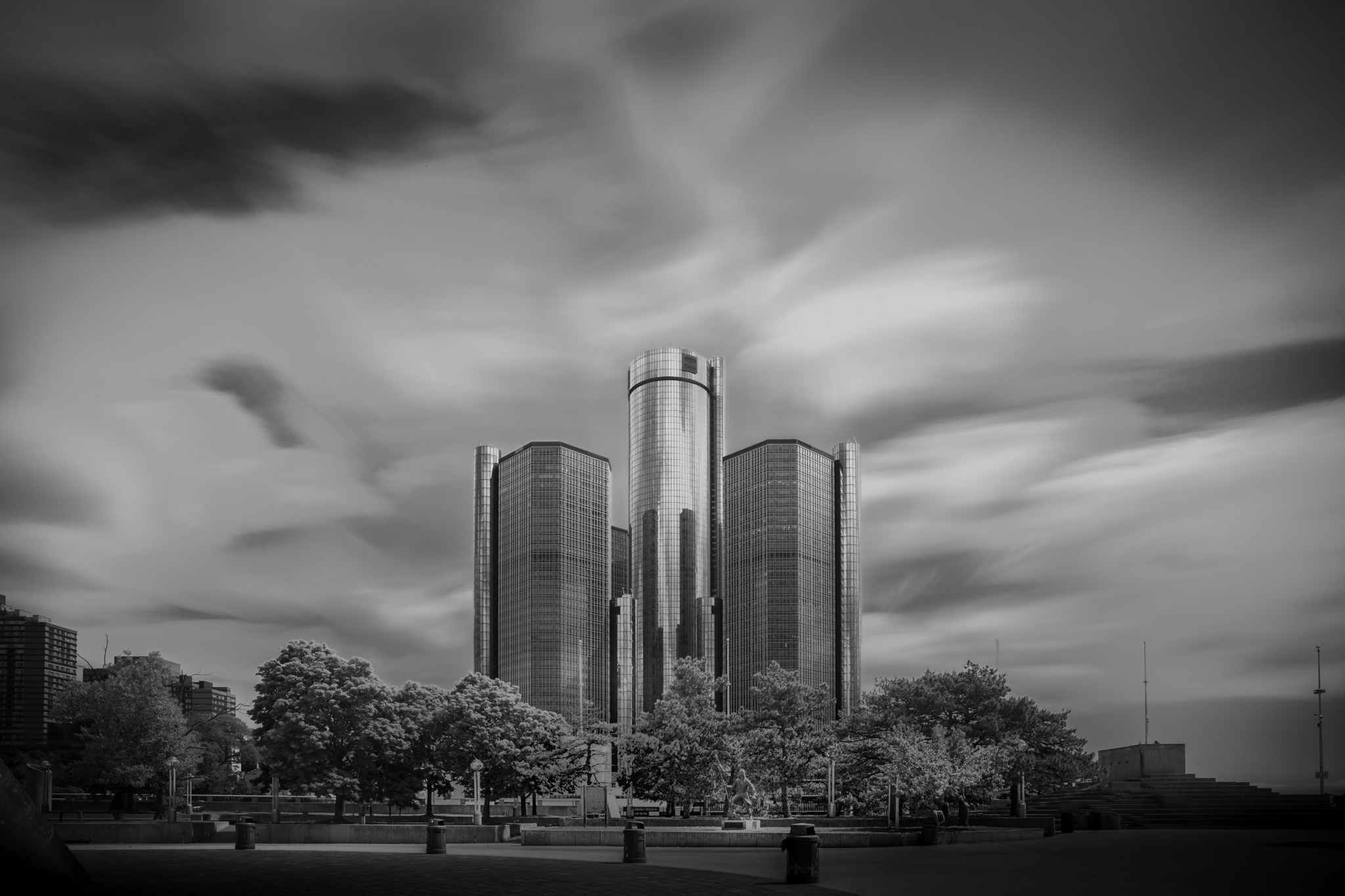
I encourage you to take one final great shot of five-tower the Renaissance Center before it's demolished into 3 towers. This angle might not be the best, try to find a photo that shows all 5 towers. I used a 21mm lens since I wanted to emphasize the clouds that day. From this distance, 50mm full frame, 35mm crop sensor would probably better showcase the RenCen.
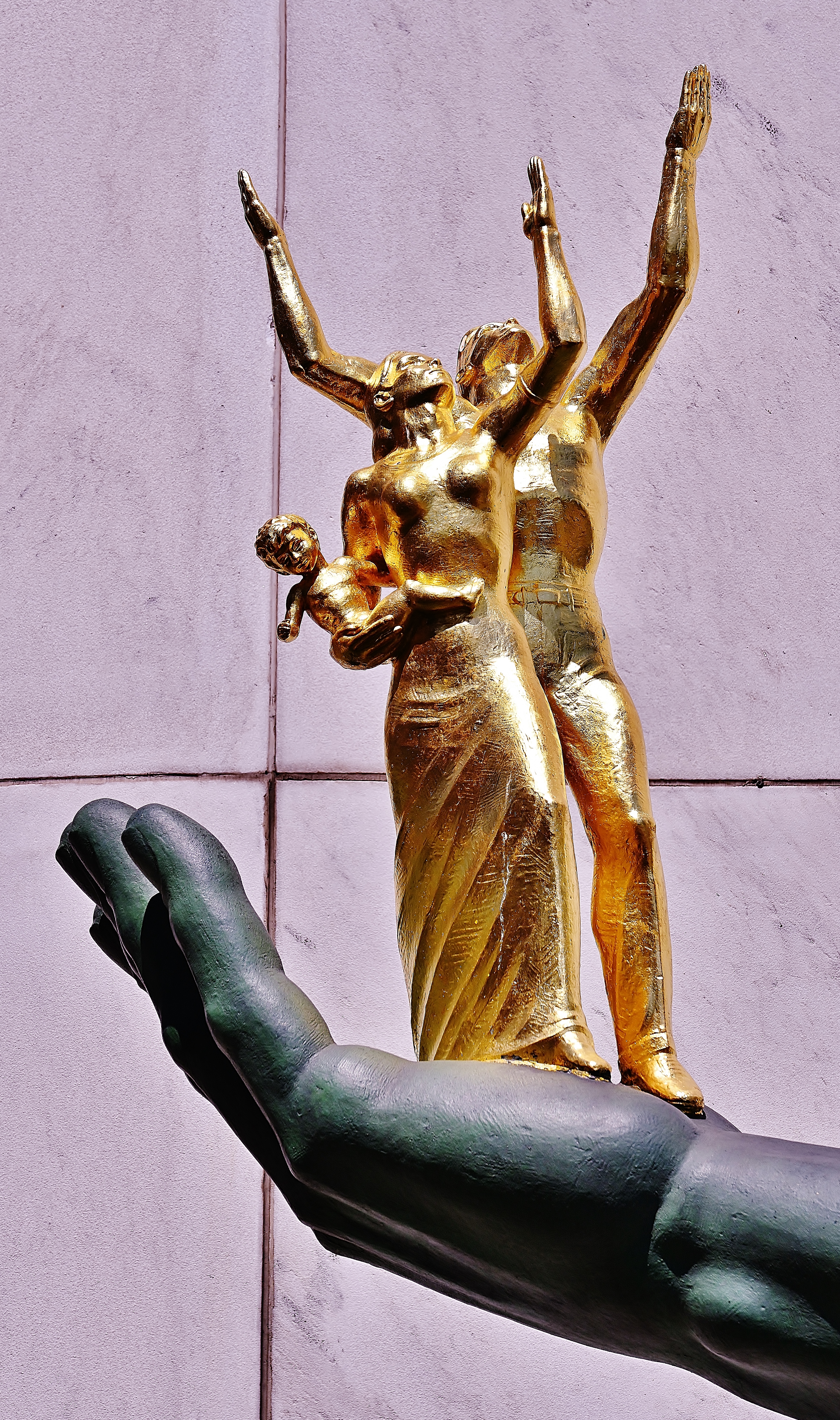
What would a photo-walk in this area be without a stop at the Joe Louis Fist and the Spirit of Detroit? Here's a photo of the latter inspired by one Tom Barr made during a prior Group Shoot. His photo is the 2nd one below, and exceptionally illustrates the concept of "fill the frame". I was apparently much further away than Tom since I used a longer lens but ended up with lower magnification.
200mm full frame, 135mm crop sensor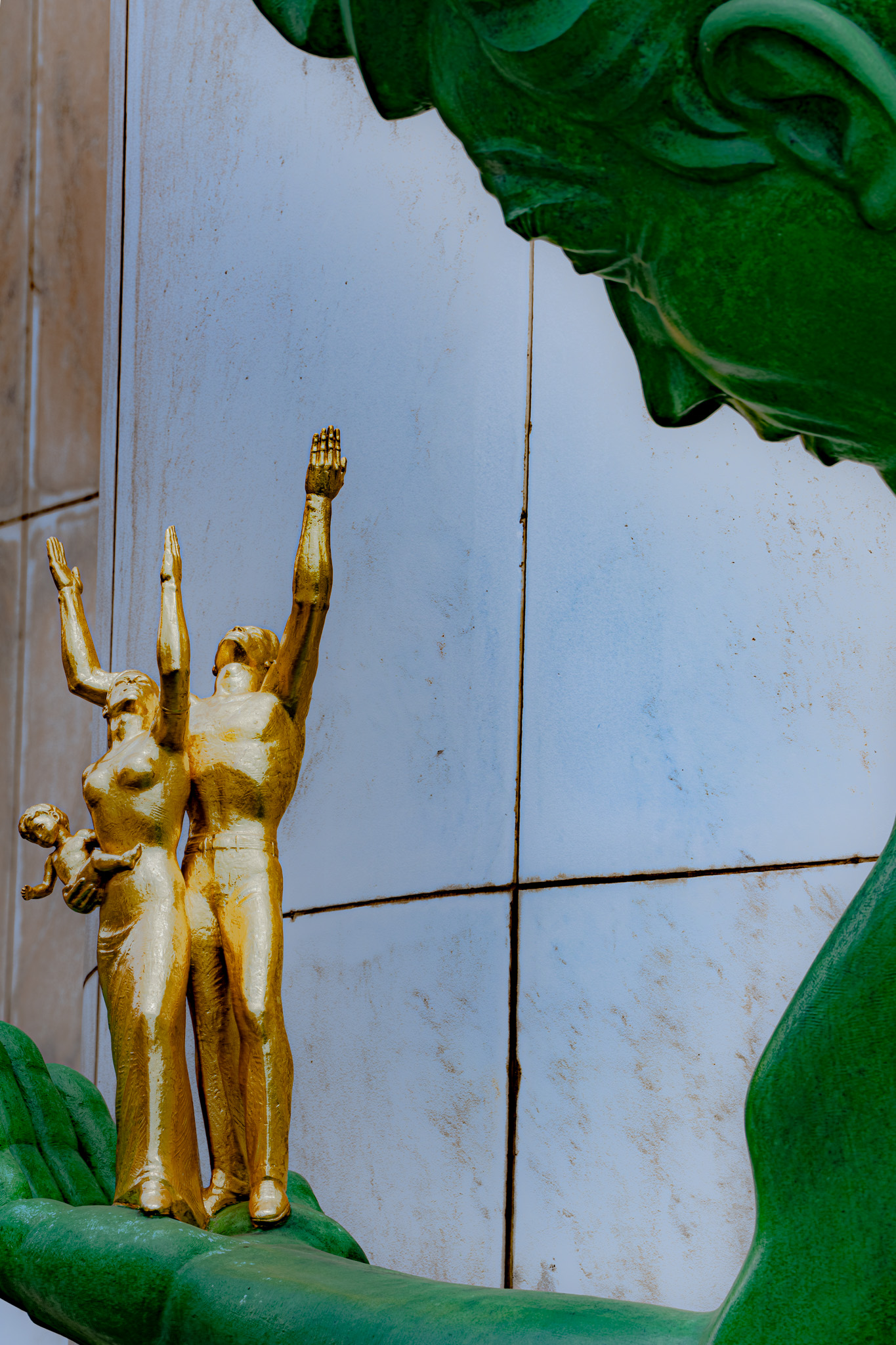
Glen made this superb photo of the alley between #9 and #11. The light and shadows can often be terrific in this passageway between Larned and Congress Streets, and Glen captured it to perfection.
75mm full frame, 50mm crop sensor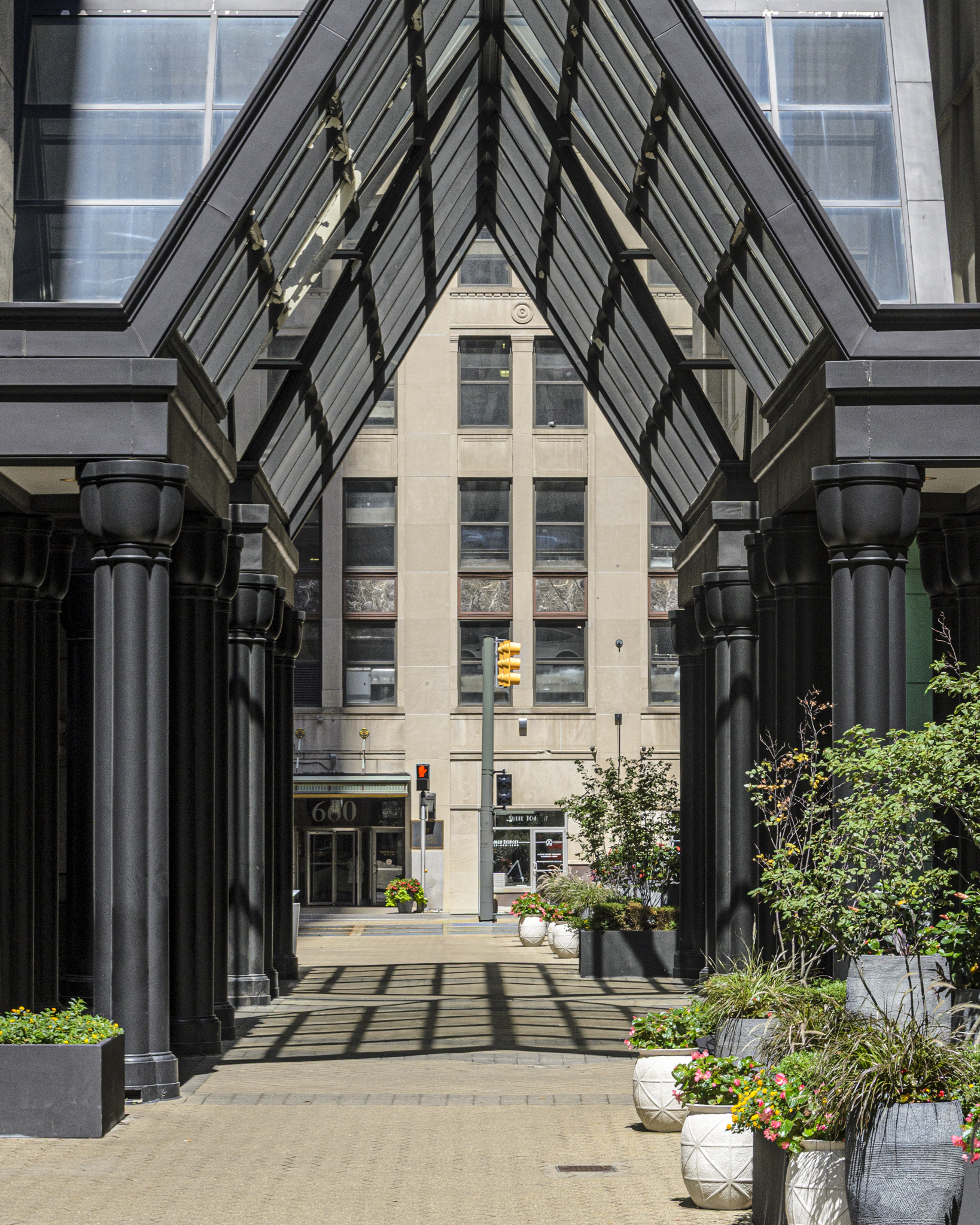
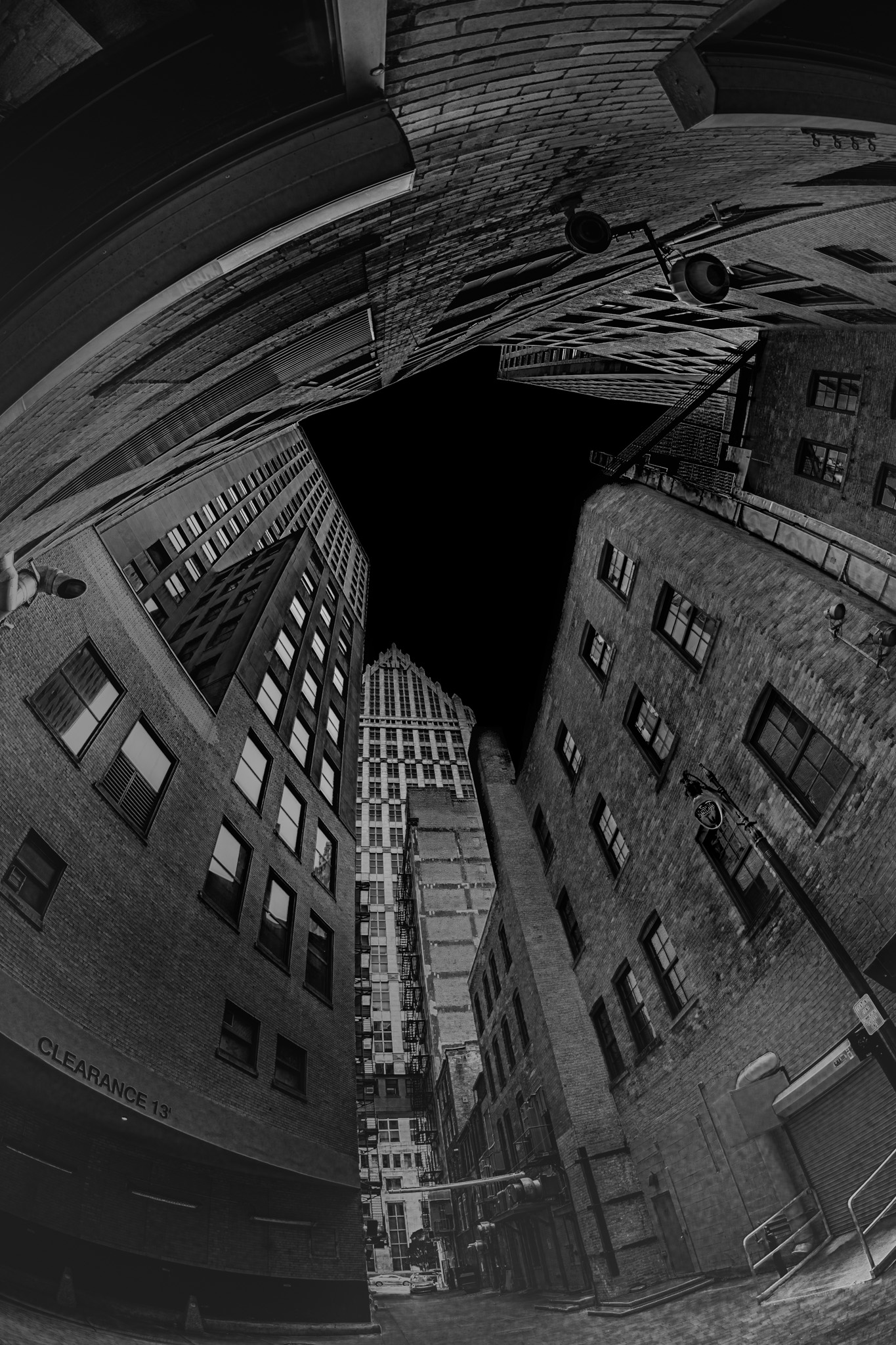
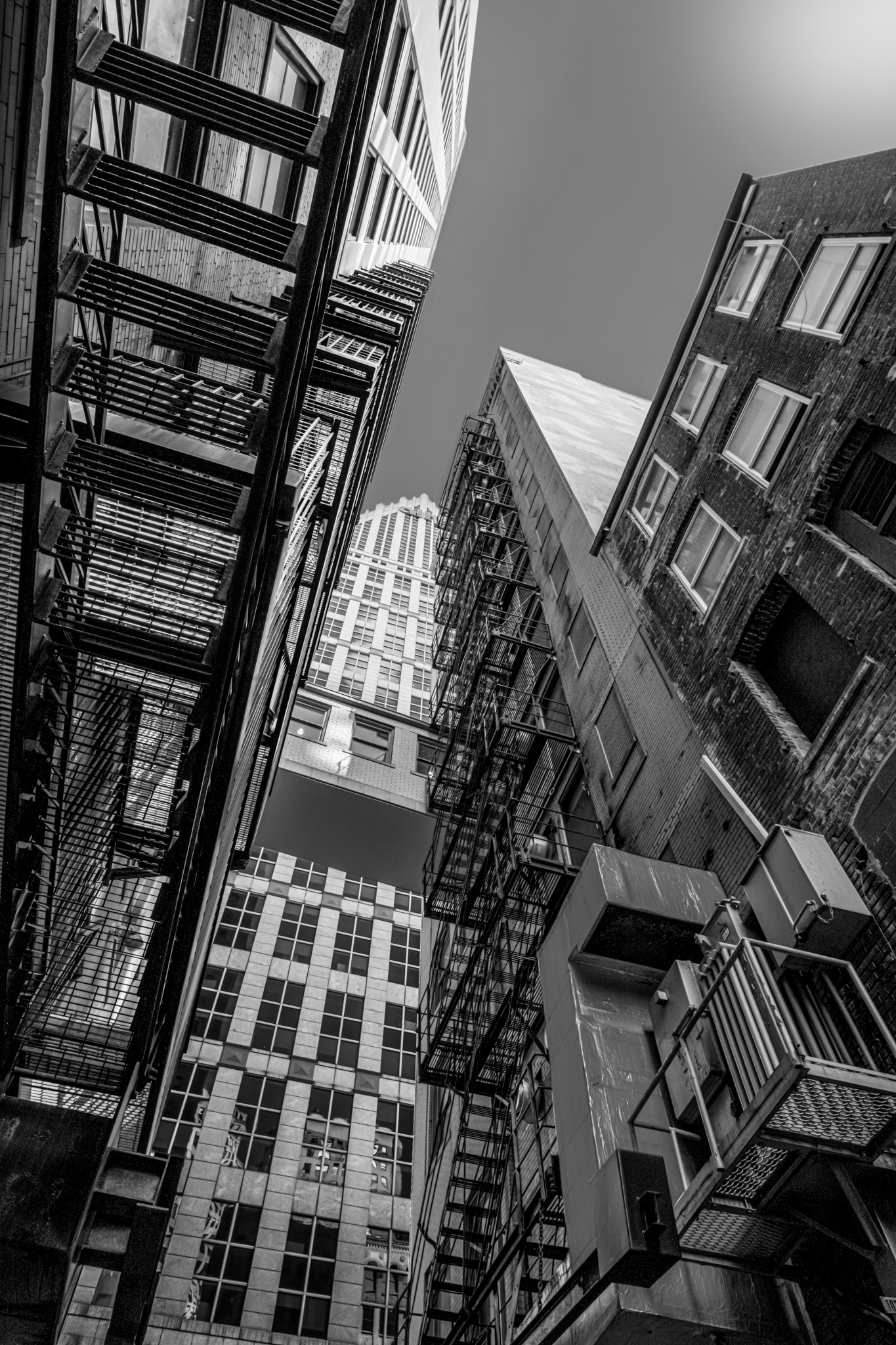
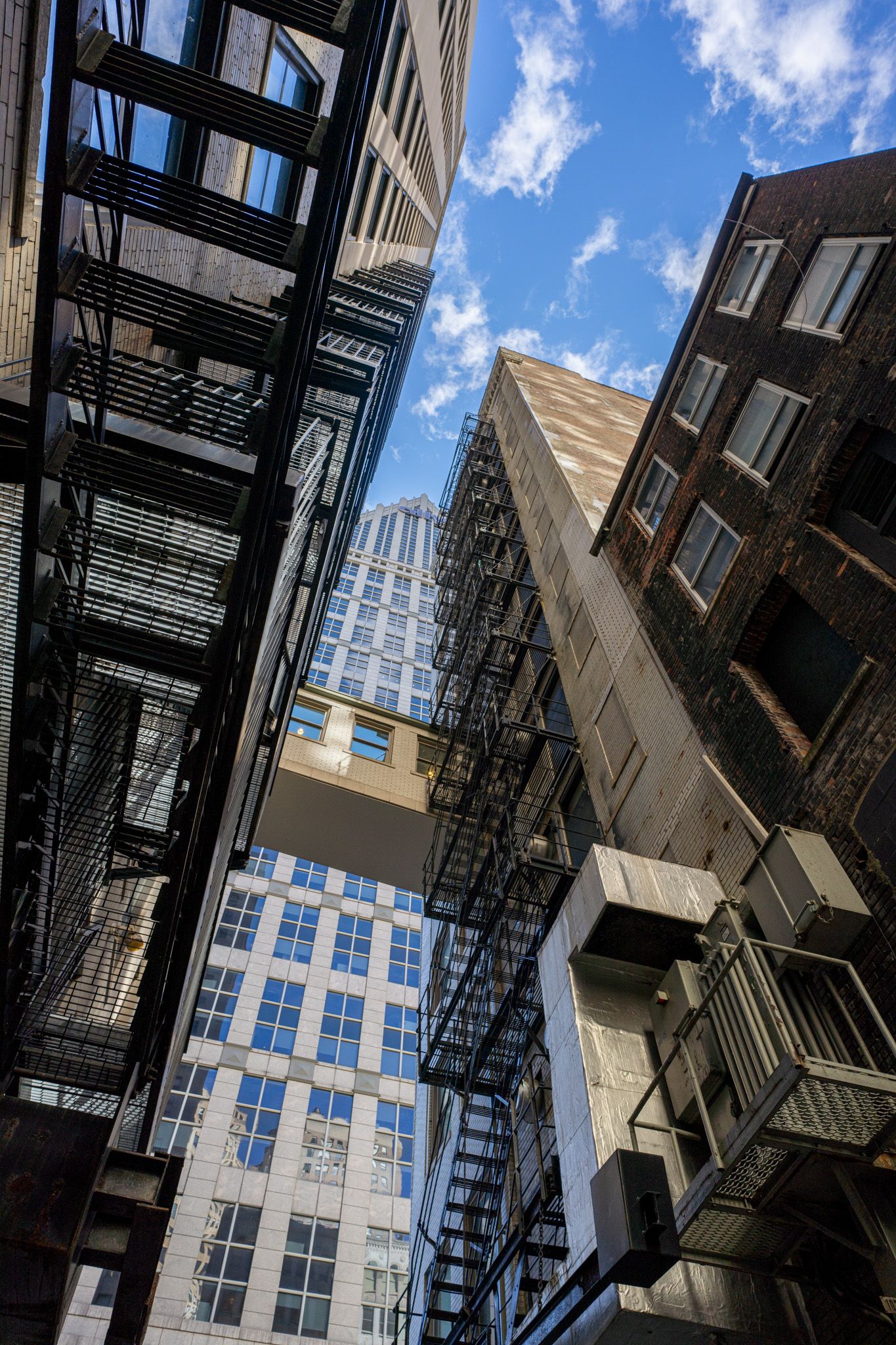
With this 11th spot, we've made it to one of my favorite spots to photograph in all of Detroit. It's grimy, slimy, and you should only venture into it with a friend who holds no ill will toward you. There's so much to photograph from within this alley formed by the First National Bank Building which snakes around here from Campus Martius down to Congress Street. Here are a few of my favorite photos from this alley. Be sure to wipe the grease and tar off your shoes once you leave.
I like the straight-up photo from the center of this alley. You really get a sense of "reach for the sky". I think one of the more important elements of composition here is the placement of the Ally building, since that's usually the brightest and most beautiful building from here. I don't know whether lower-left-corner is the best spot for it, but I think that's a major element to consider as you frame your photo.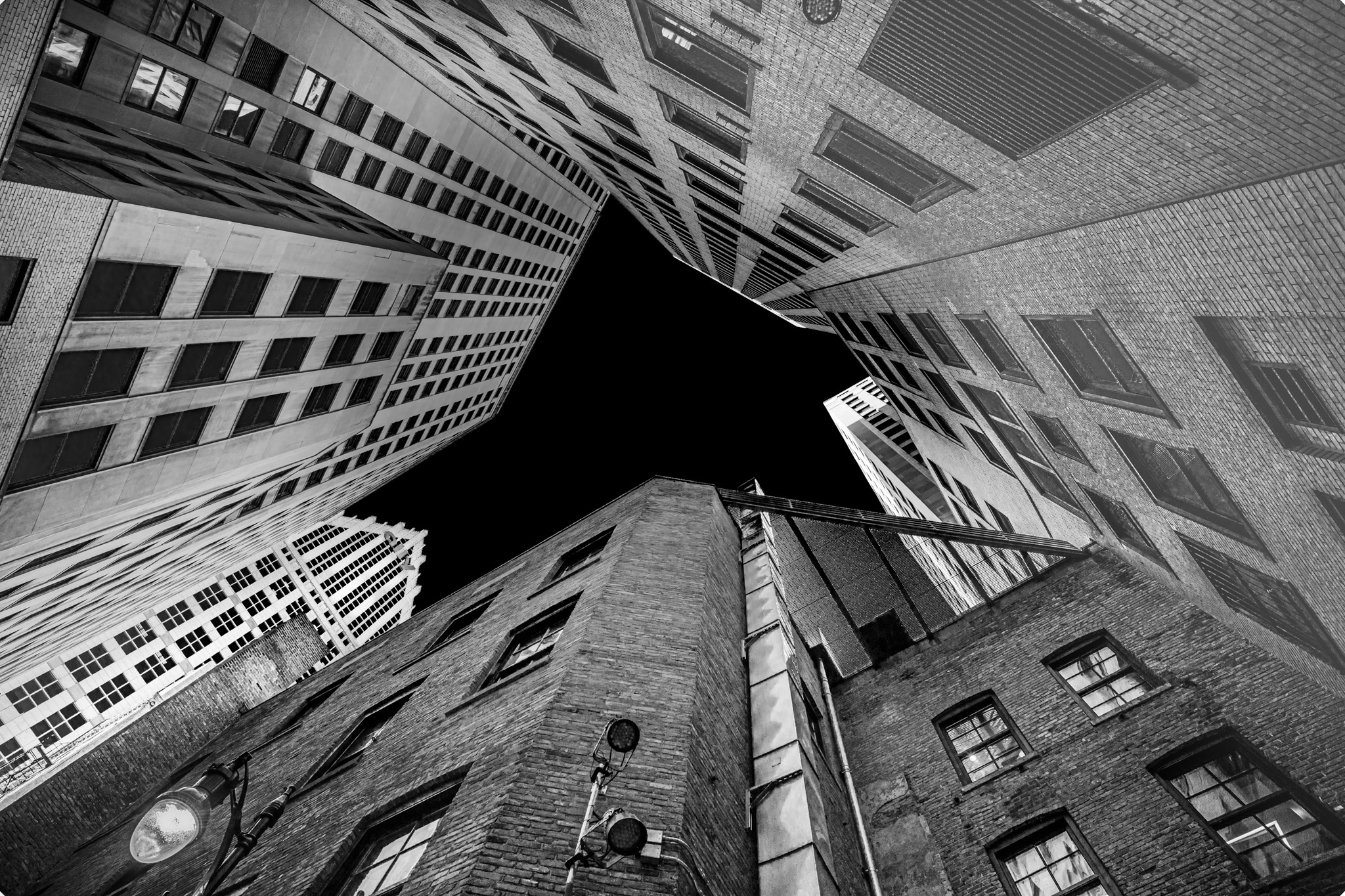
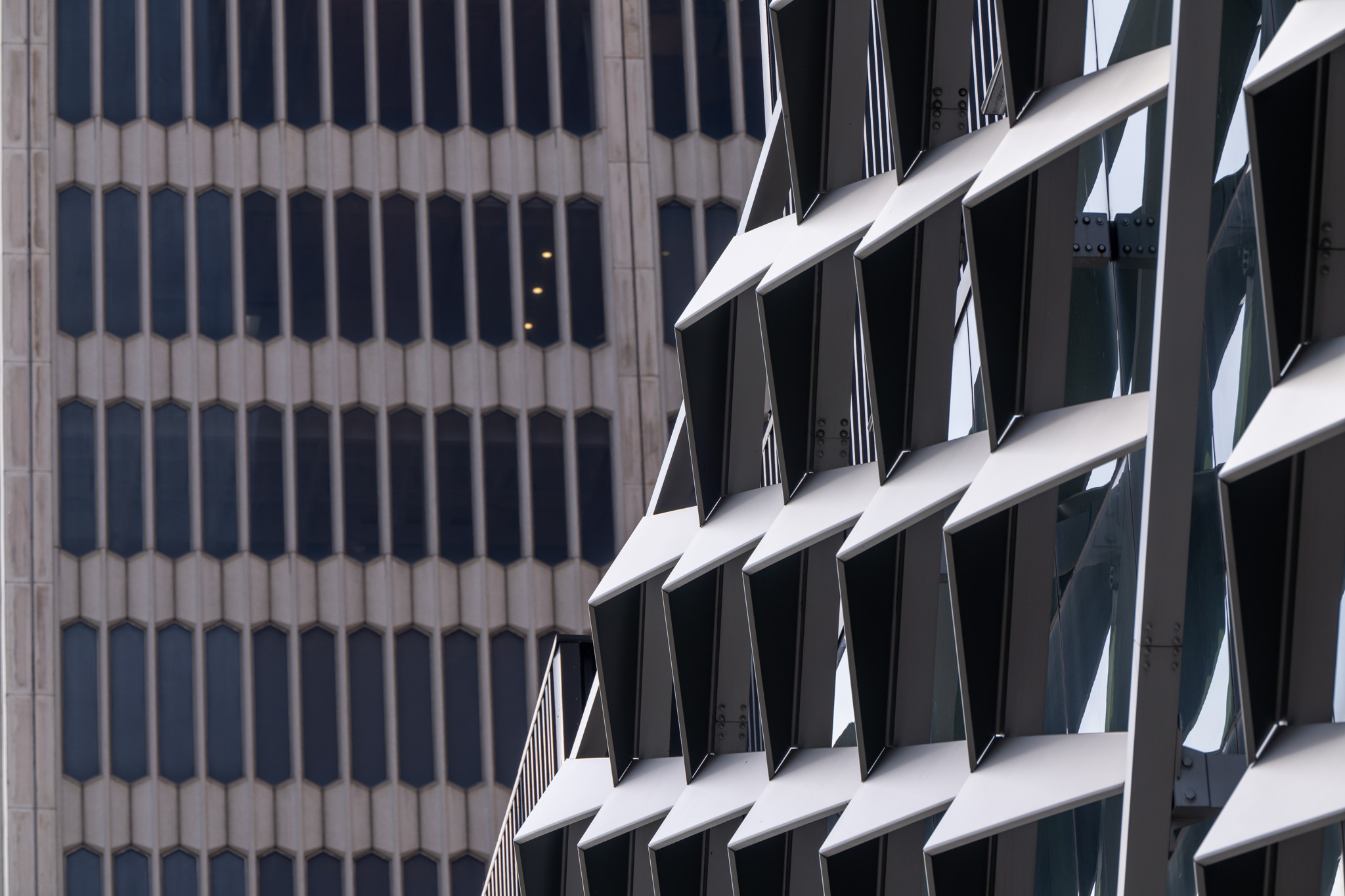
Back to Woodward Avenue, the Capital One Cafe has been clad with Armadillo-like fins, reminiscent of one of my favorite albums as a teenager, ELP's Tarkus, some 55 years ago. ROCK ON, Detroit! The focal length of the first photo was chosen to best isolate the fins, from the angle and distance I'd chosen to stand. The second photo contrasts two textures, the Capital One Cafe fins on the right against One Woodward Avenue in the background on the left. It might have been better with a smaller aperture to get One Woodward in focus. Or maybe it wasn't a great idea for a photo after all.
218mm full frame, 145mm crop sensor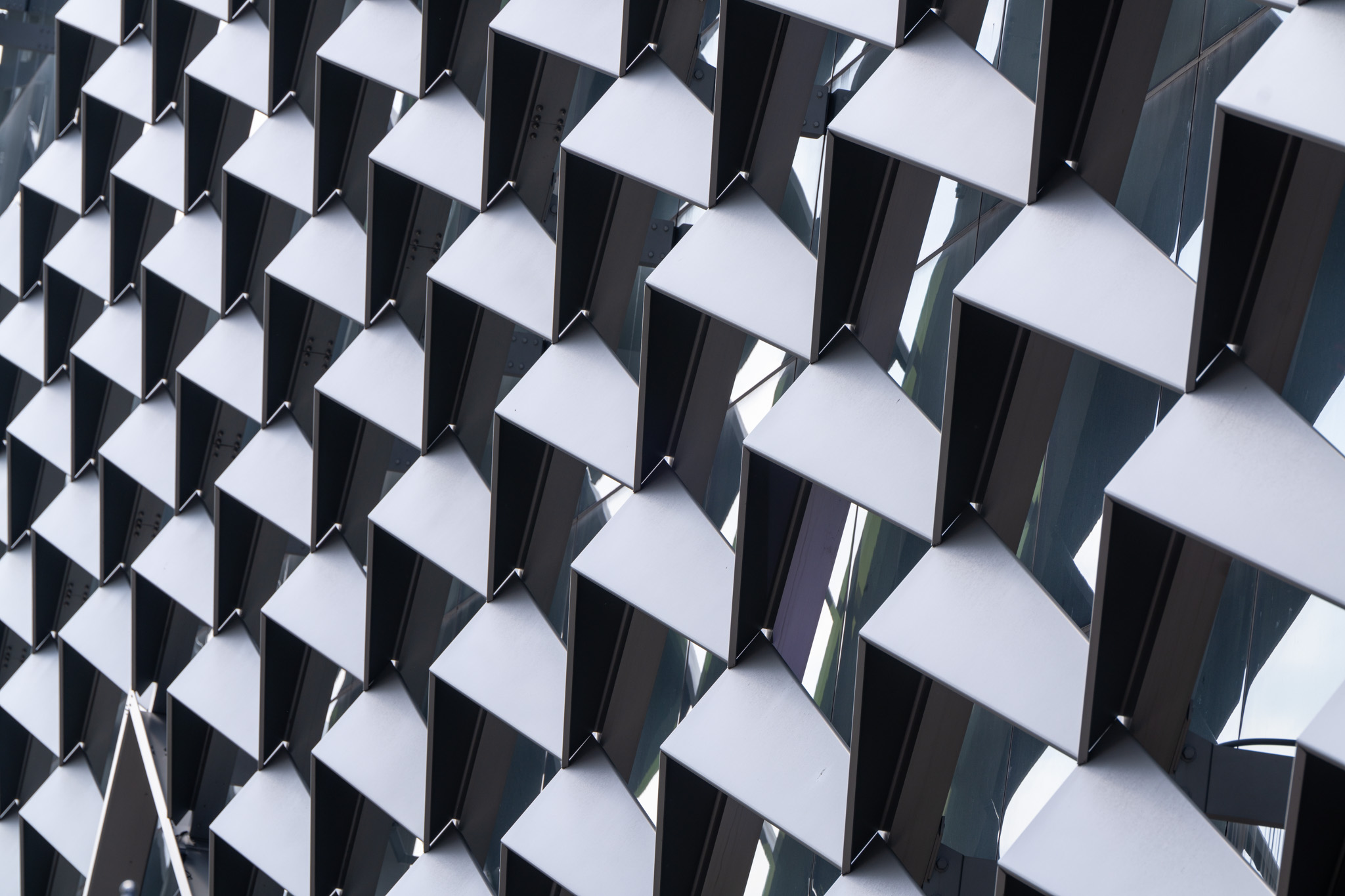
I took this photo 10 years ago, on September 3rd, 2016. I showed it at the March 2017 meeting of the Eastside Camera Club, and based on the club's reaction, this photo launched my specialization in architecture photography. I think it's a strong image because it fills the frame with the building, without giving you any point of context. It's, of course, an awesome repeating pattern, and most of the buildings around you right now can give you that advantage. I'm not sure whether it's important to have put the corner of the building on a rule-of-thirds line, but it's surely better than having it centered. The brighter windows near the center give your eye a place to rest.
90mm full frame, 60mm crop sensor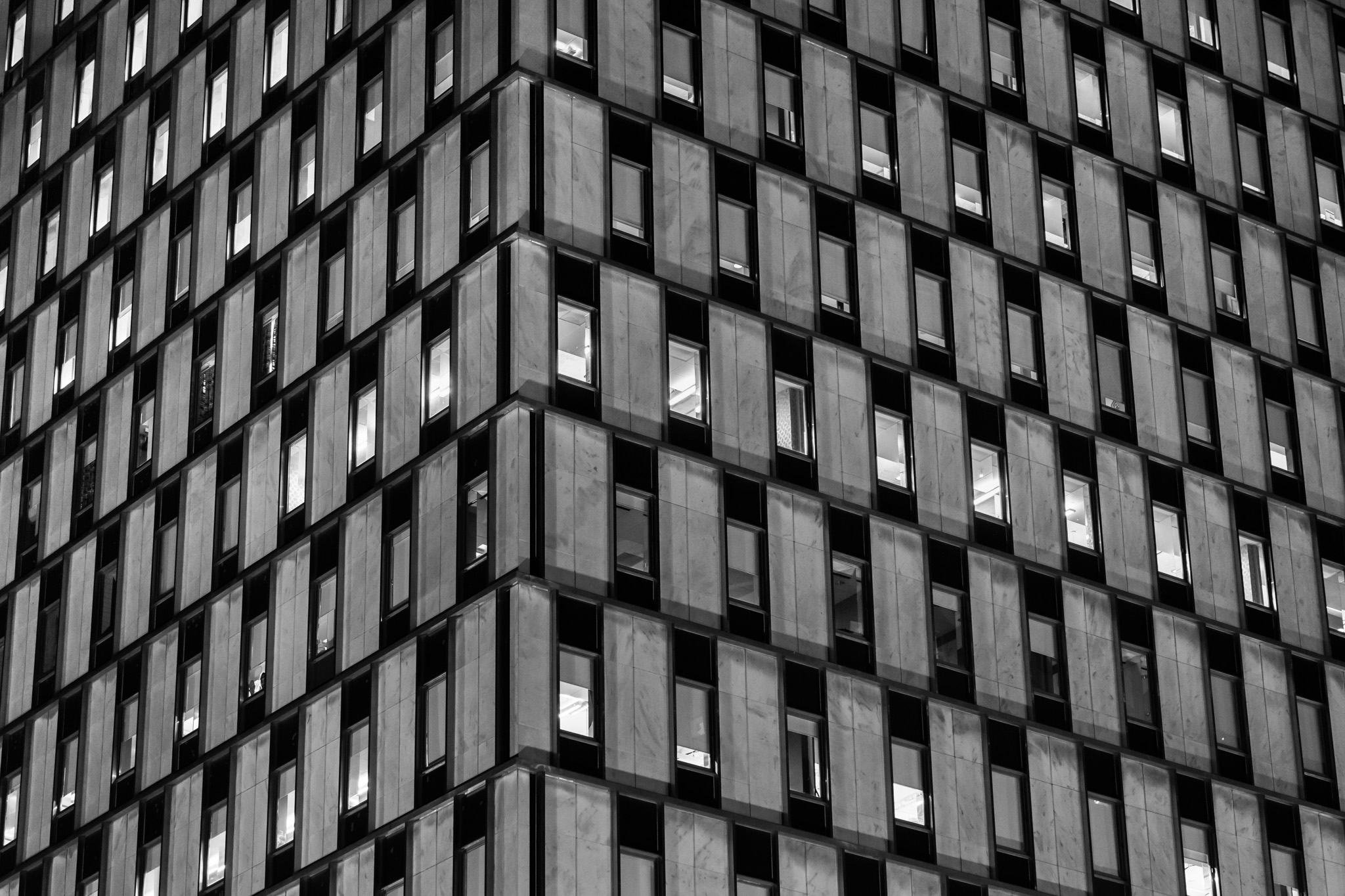
This abstract from the steps of the Qube near the north end of the building places the Vinton Building (left) in front of the Ally Building (right). I was drawn to the downward slope of the Vinton butted against the upward slope of the Ally, then the rounded corner of the Ally, followed by a downward slope on the Ally.
83mm full frame, 55mm crop sensor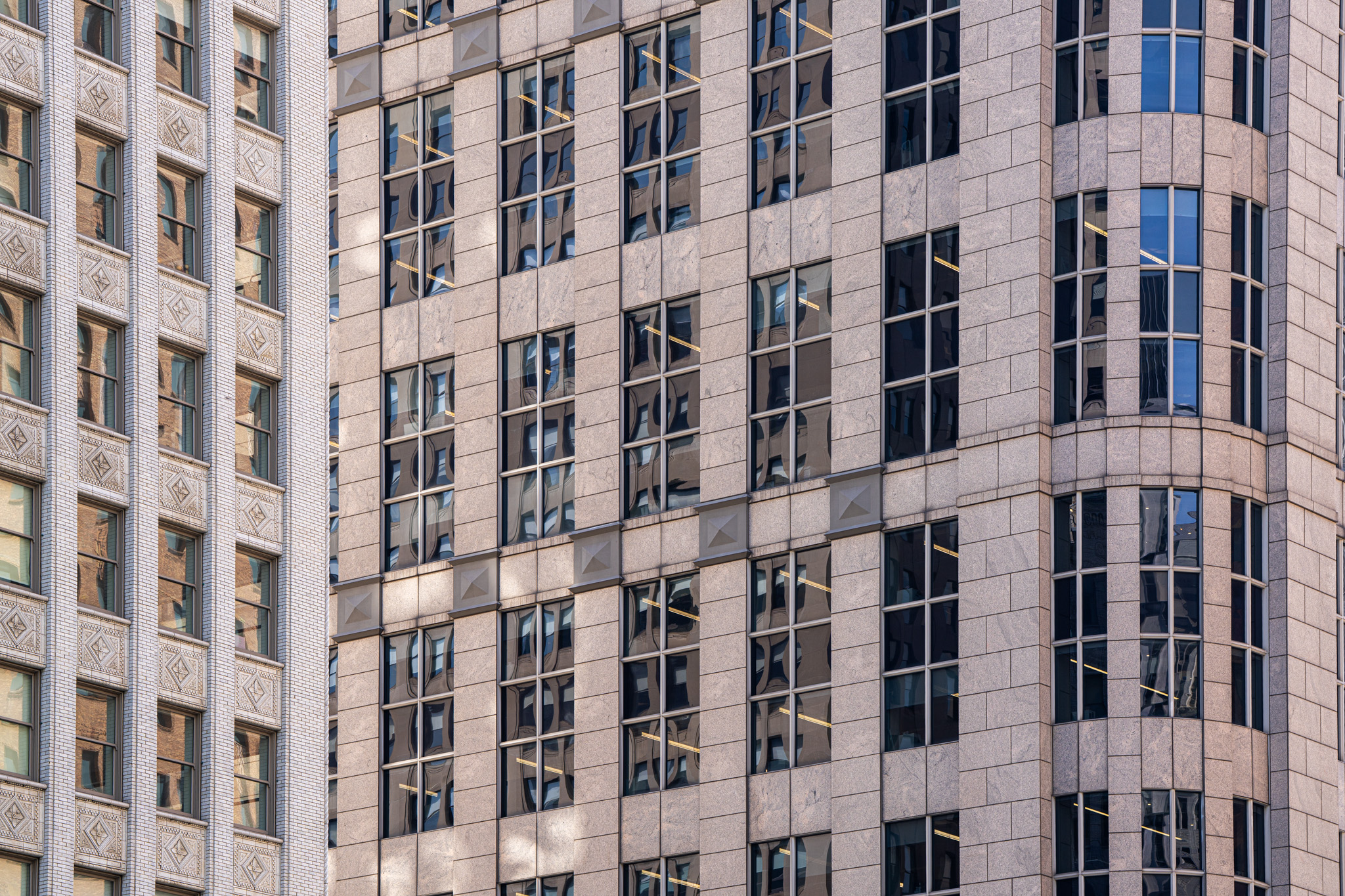
The four short buildings at bottom-center were built between 1876 and 1880, and the 12-story Vinton Building (right side, in front) was built in 1917. You can read more about these here. The remaining buildings which give a big bear hug to those shorties I've mentioned are all part of the behemoth First National Building, built in 2 phases in 1922. The left part was designed by Wirt Rowland, of Guardian Building fame, as a replacement for the original Hotel Pontchartrain that once stood here, and the remainder was designed to snake through the vacant land from Cadillac Square through to Congress Street. The alley we stood in for #11 was between those four short buildings and the First National Building. Geez this is my favorite block in Detroit.
21mm full frame, 14mm crop sensor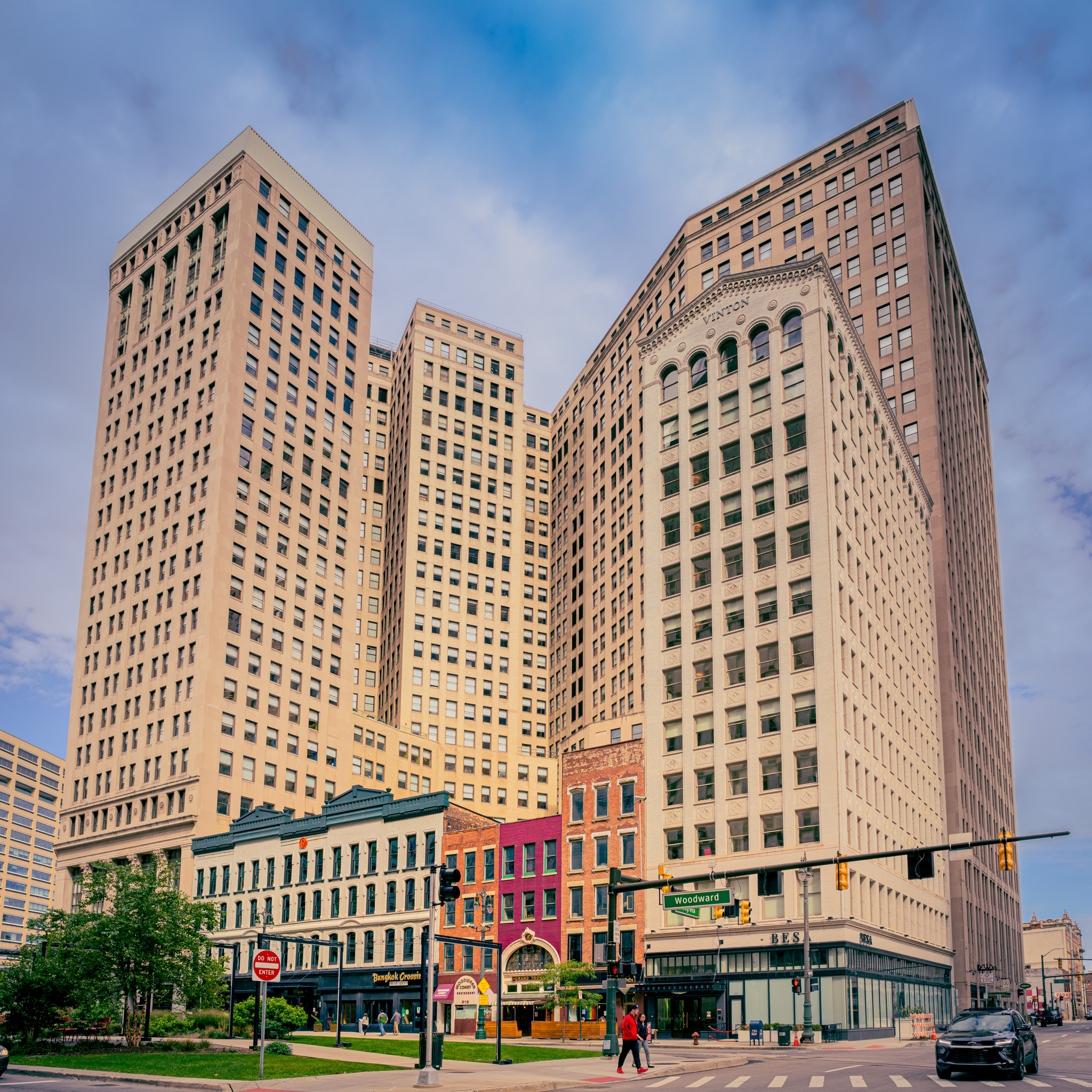
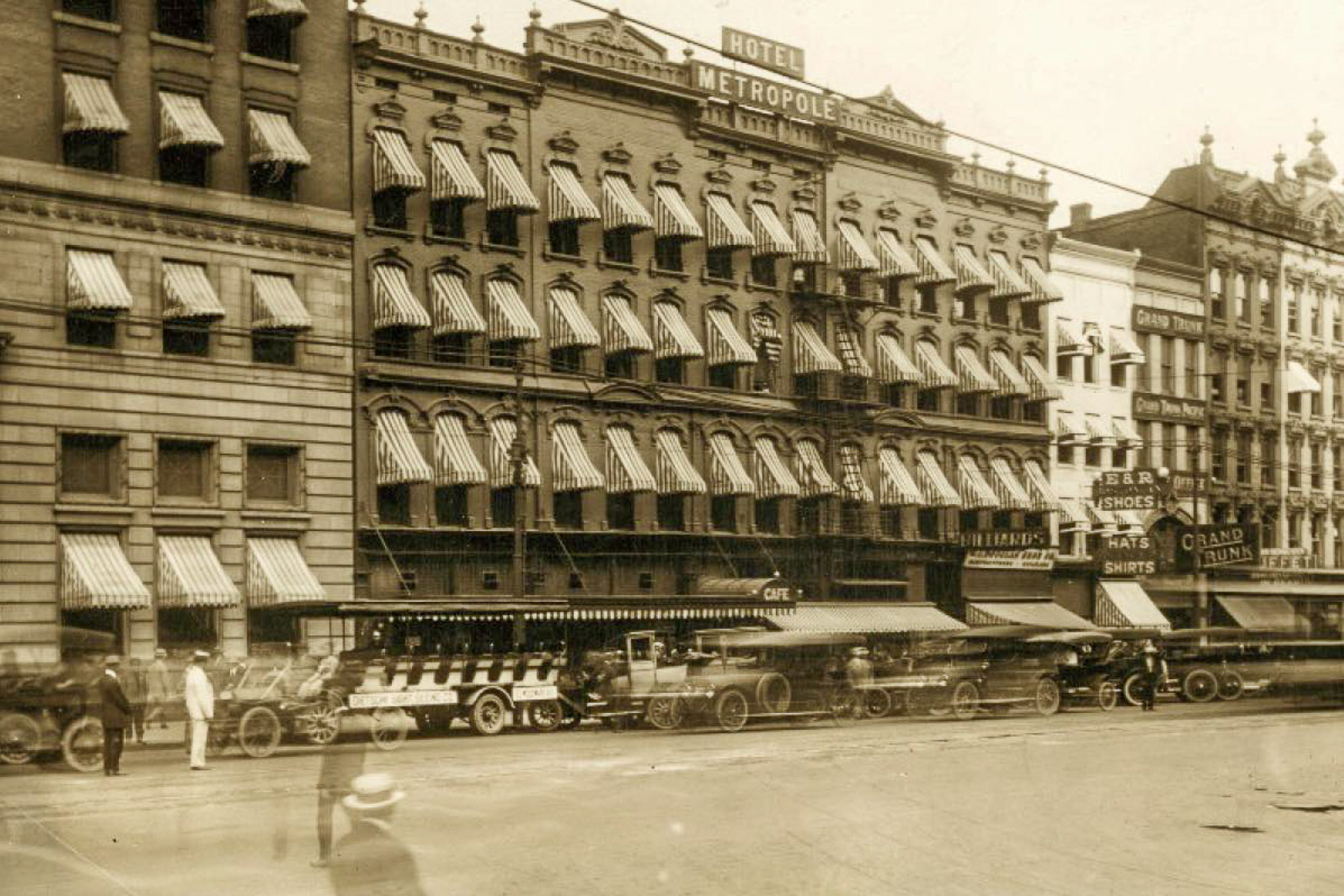
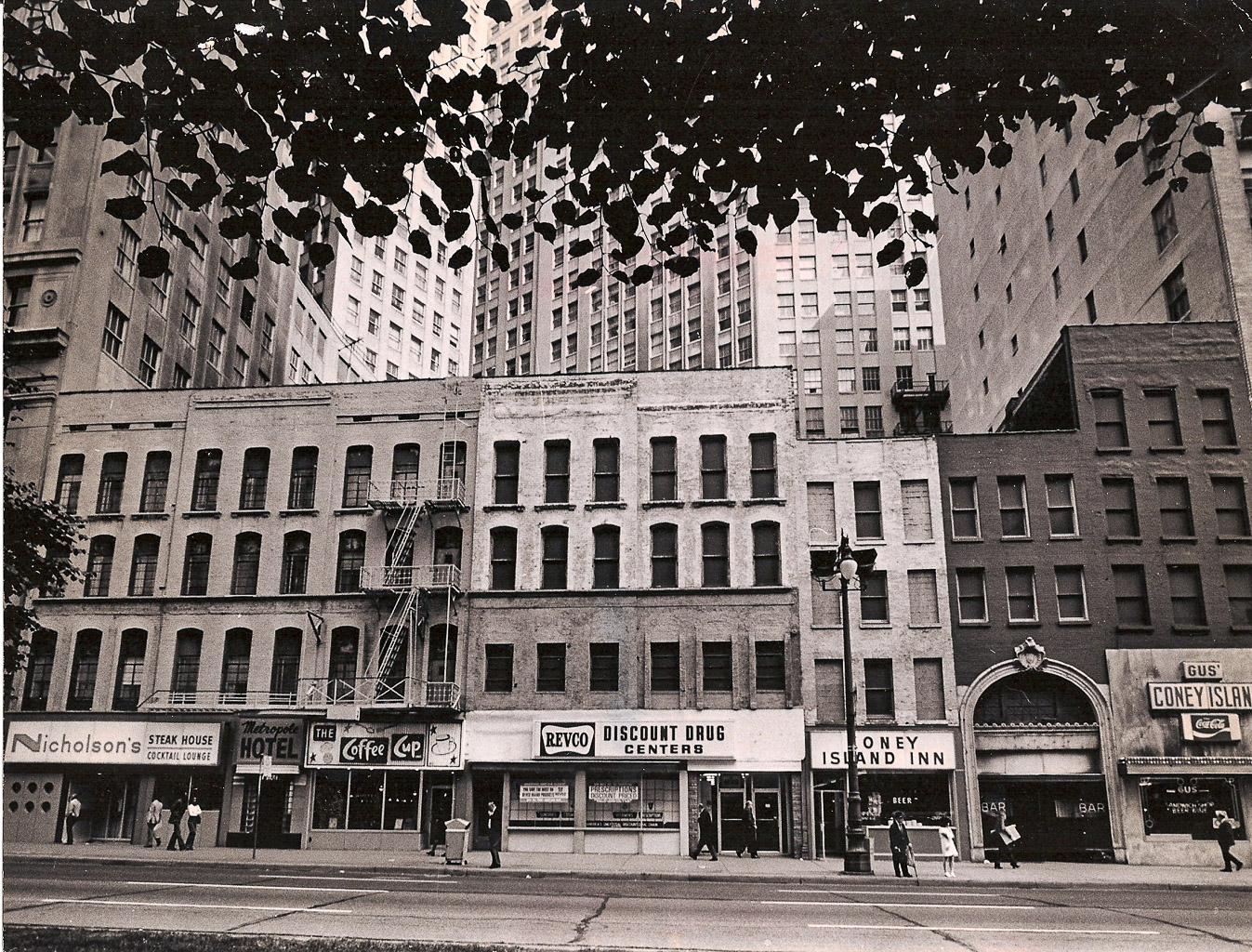
The long white building in the photo above and the close-up below was the Metropole Hotel, built originally as the Mabley & Company department store in 1876-1880 until it went out of business in 1896, then became the Metropole Hotel in 1898. I love this photo from circa 1915-1920 showing the heyday of the Ponchartrain and Metropole Hotels, and a Grand Trunk Railroad Ticket Office which would someday become today's eatery, and I hate to see the block's decline before this 1974 photo at which time it was still, apparently, the Metropole Hotel, but who in their right mind would ever stay there? But on the right edge of that photo is Gus Coney Island, which is the chain I went to in Mt. Clemens with Glen Hewett and Ed McDonell after ECC meetings for the first few years I belonged to the club. I don't understand how this circle of my life is even possible, but there it is. I'm so very happy that the 1876 buildings which eventually formed the Metropole Hotel were restored in appearance, if not in function, from 2013-2017 for Bedrock offices. I hear it's quite modern inside.
24mm full frame, 16mm crop sensor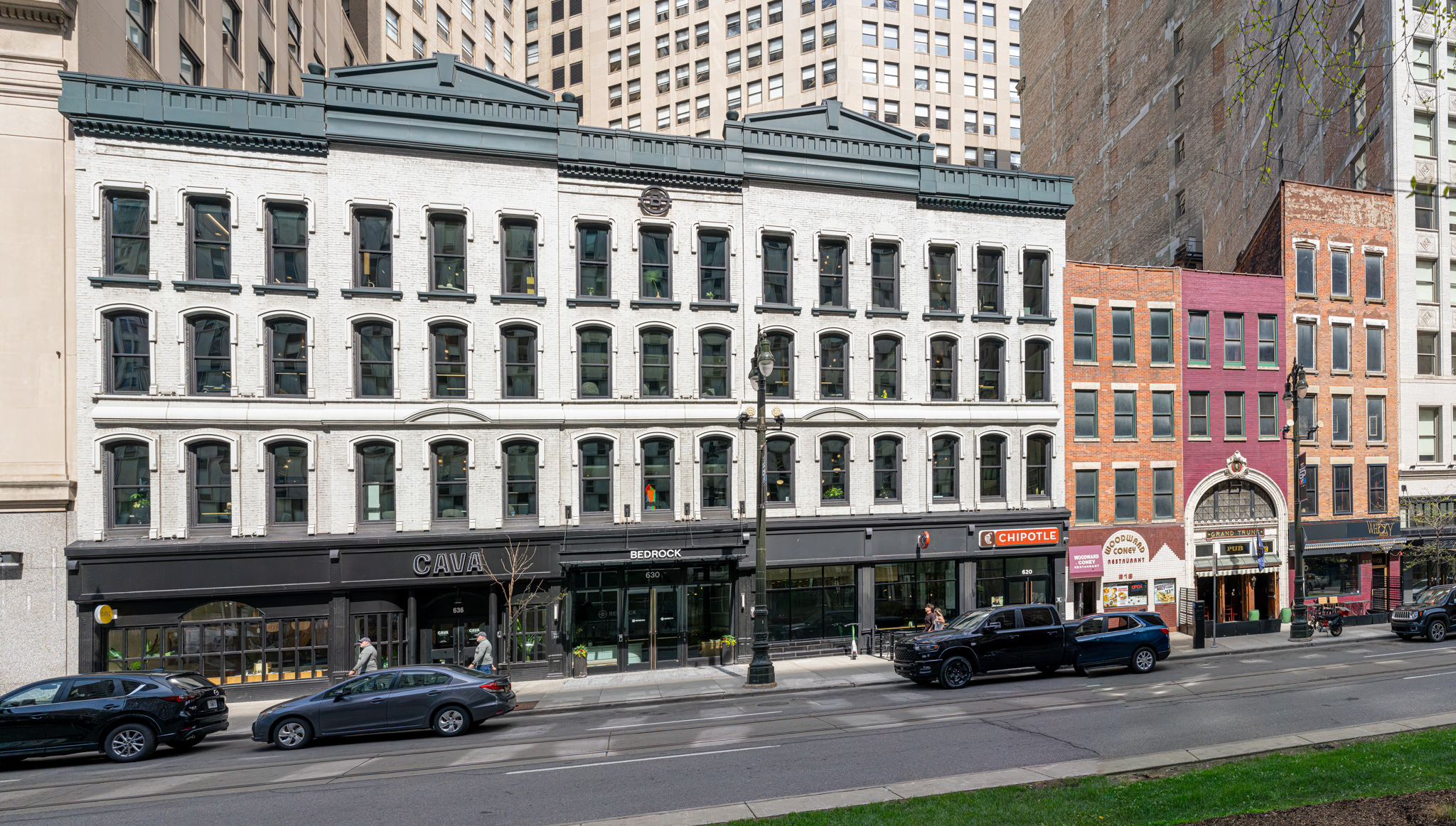
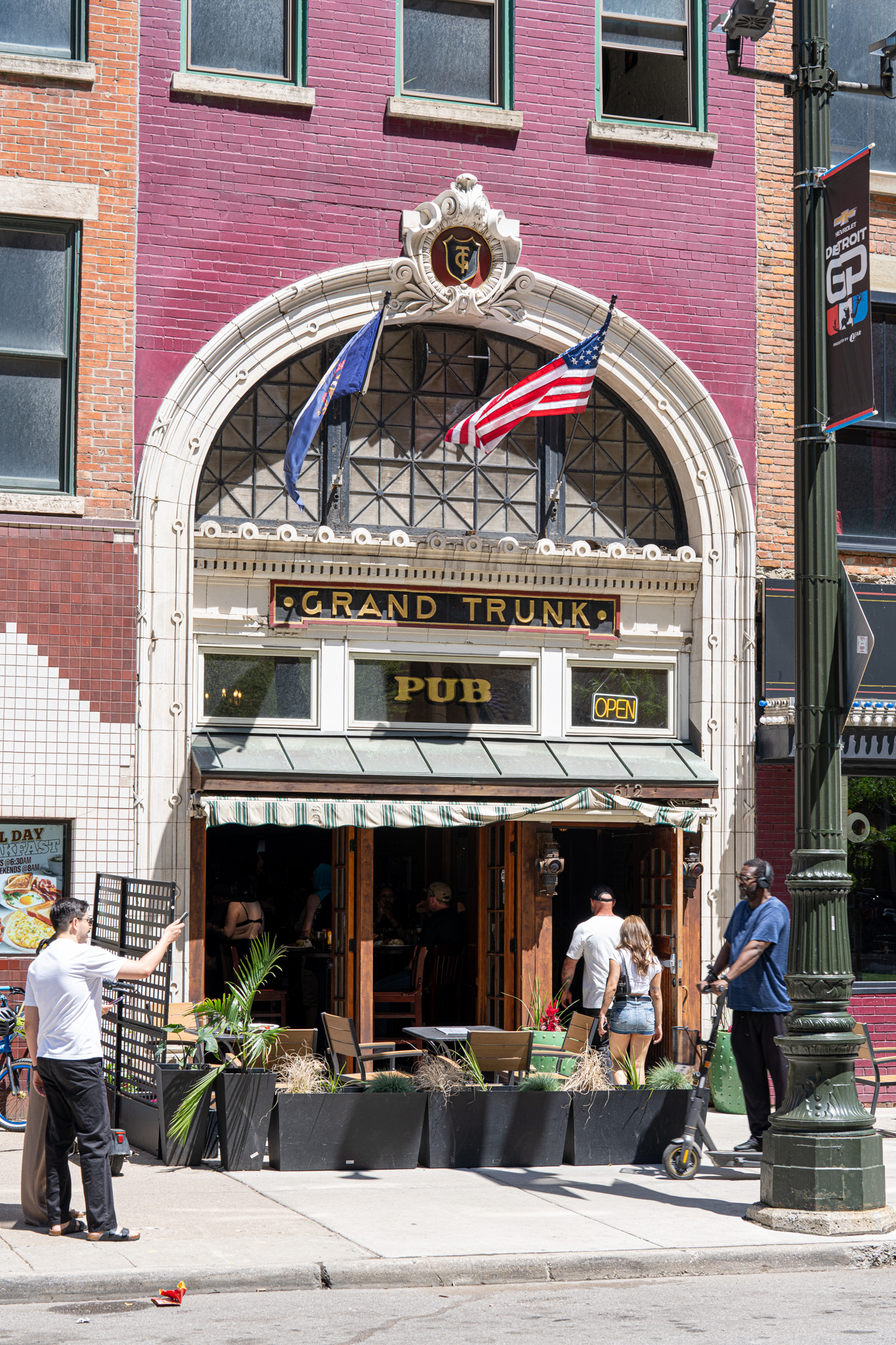
This photo shows the front of the Grand Trunk Pub restaurant where we have a 5PM reservation for supper. It's on the east side of Woodward, 1.5 blocks north of Jefferson, at 612 Woodward Ave. We'll be in the balcony at the back of the restaurant. Walk straight back when you enter the restaurant, and go up the stairs. The reservation will be made as "Jeff Bondono (Eastside Camera Club)".
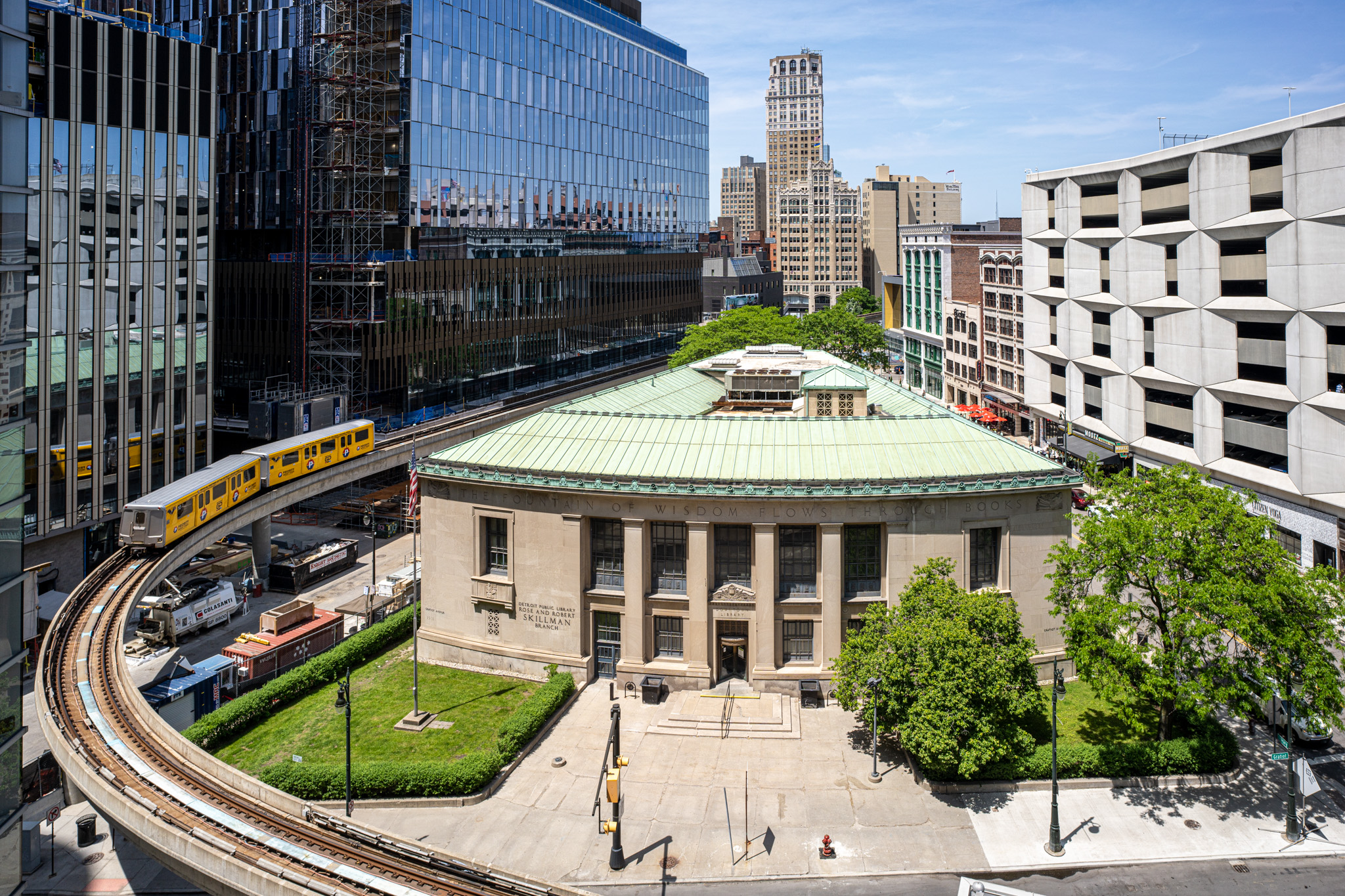
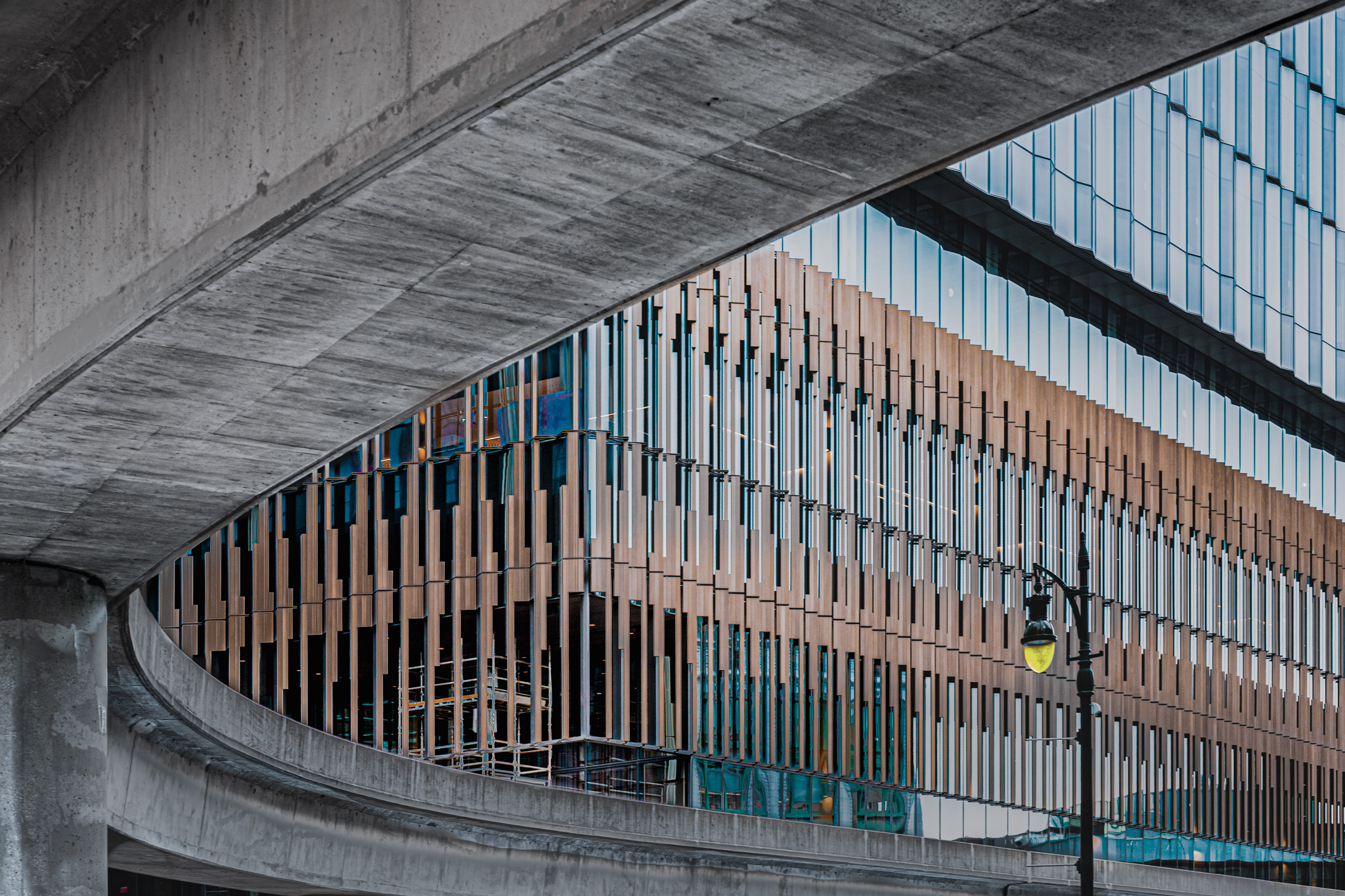
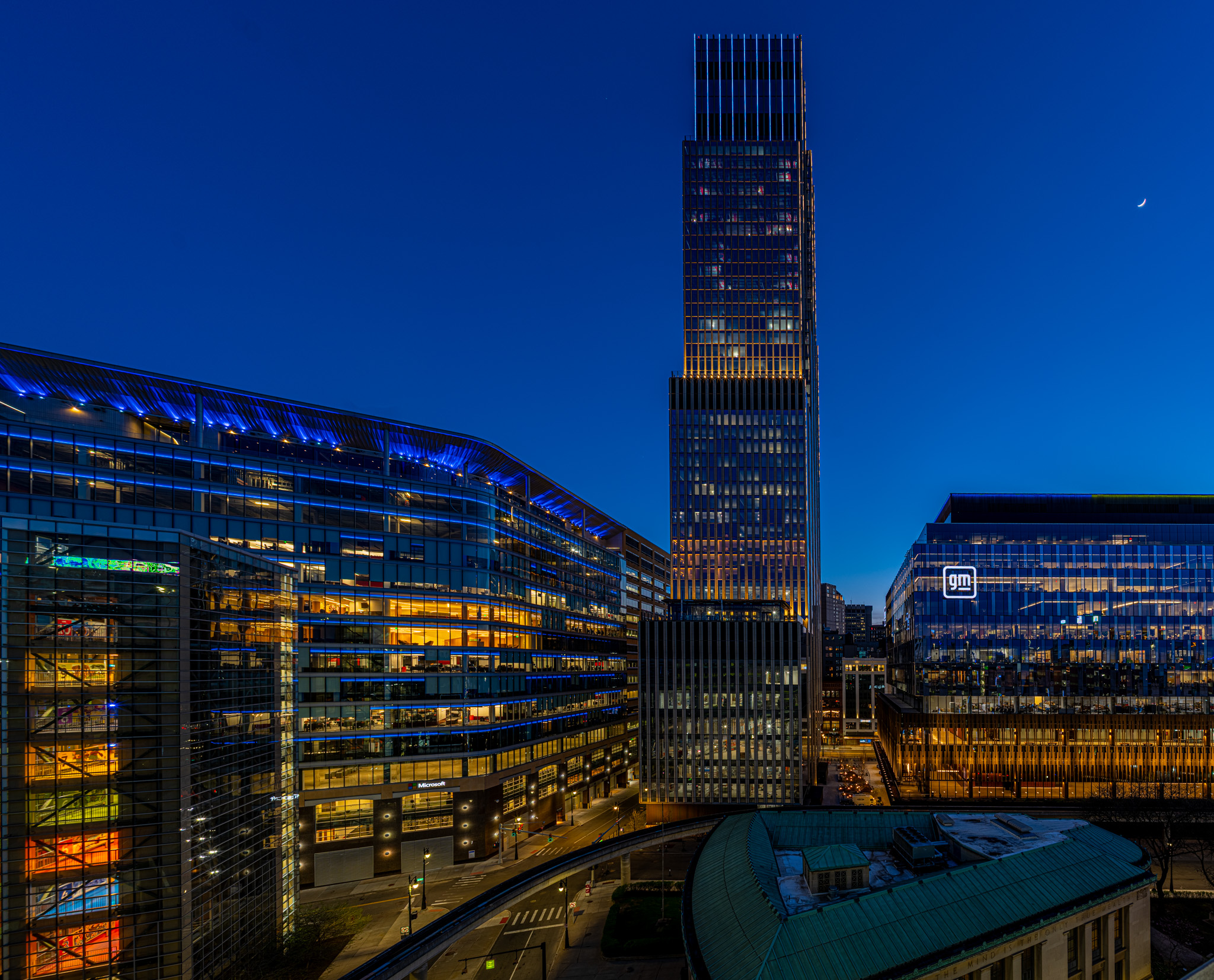
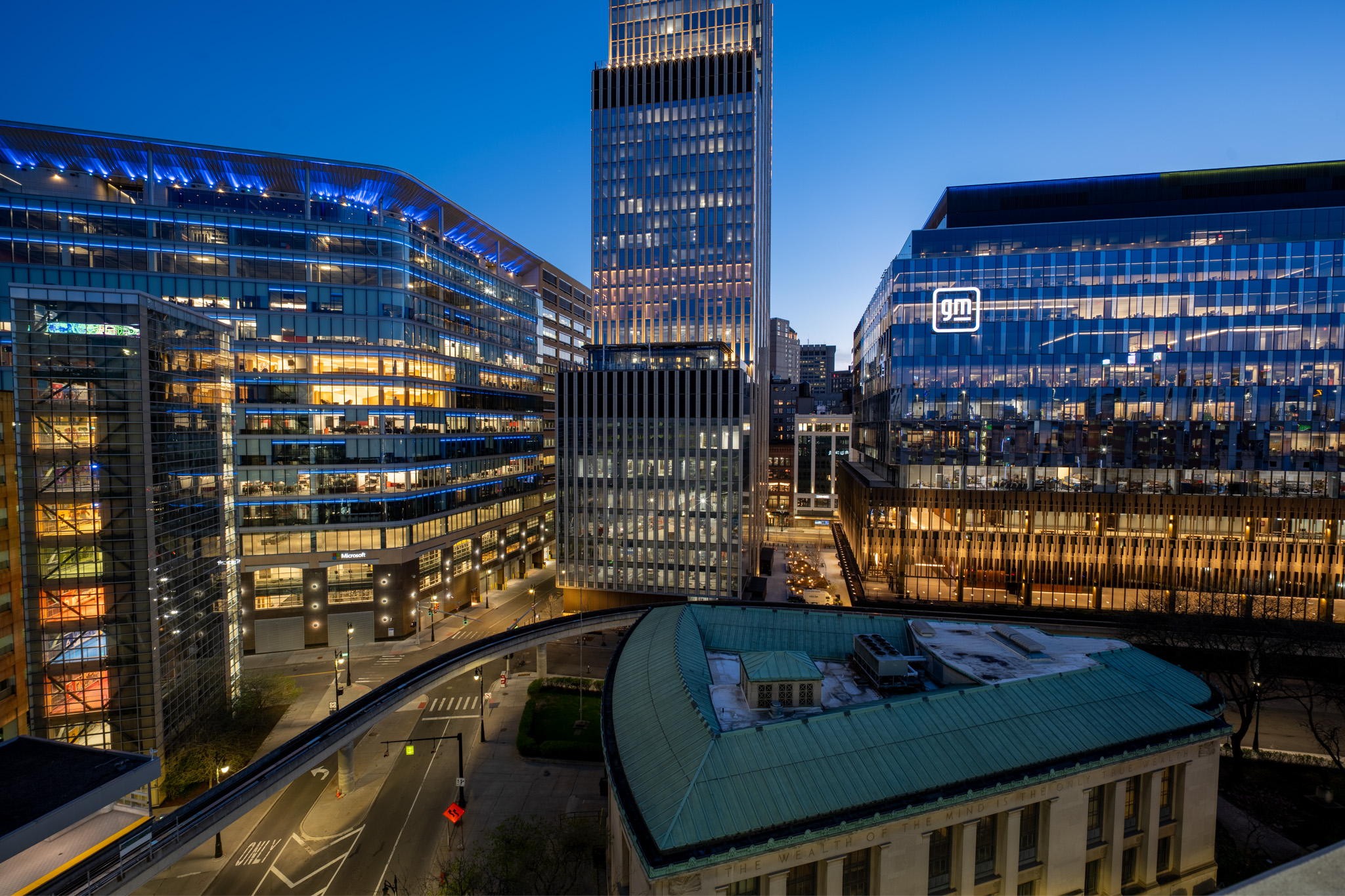
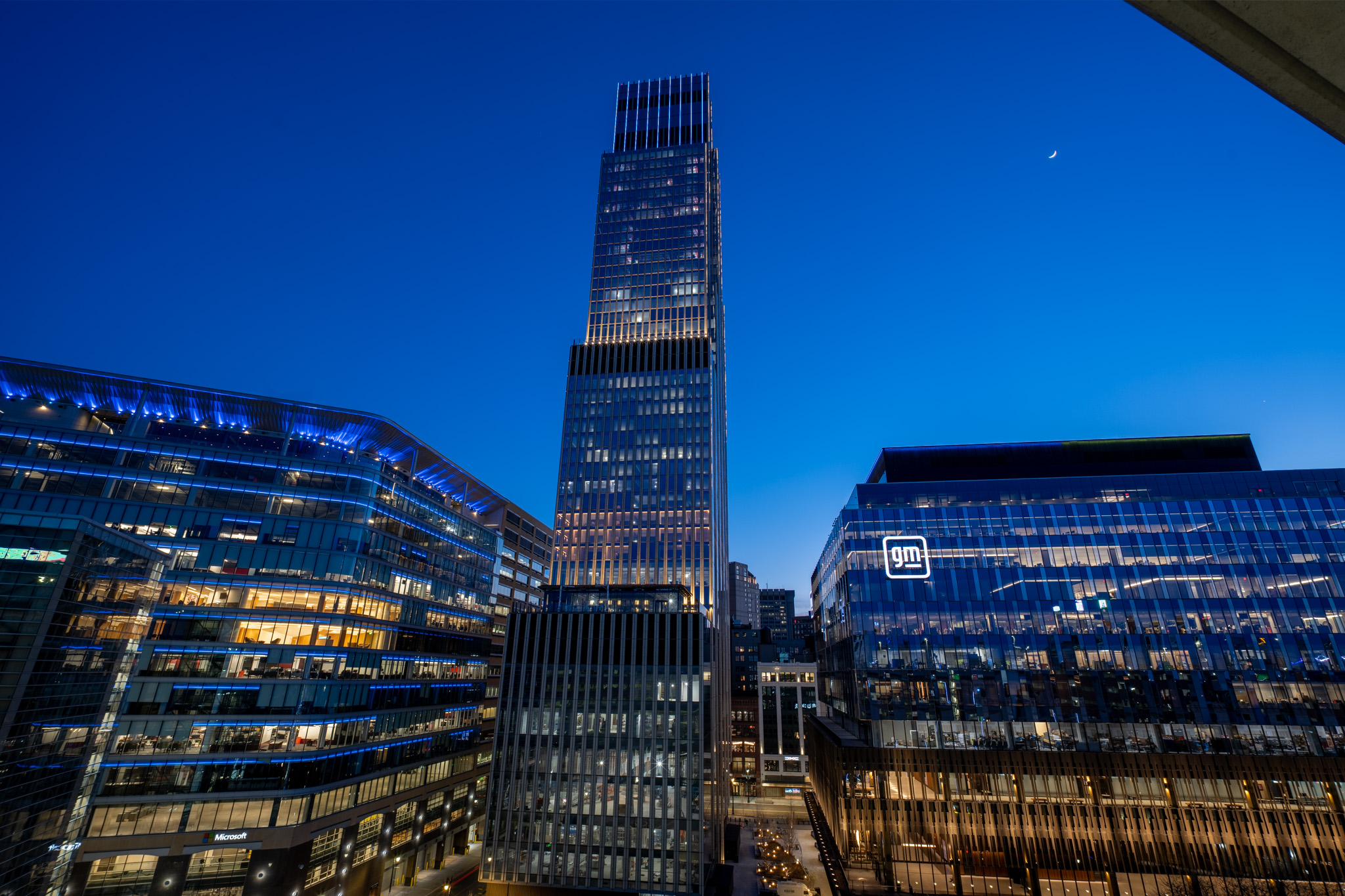
Anyone who's very ambitious and into astrophotography might want to go up into the Z-Deck parking garage, I'd suggest the floor below the roof deck so you don't have fences to contend with, and attempt to photograph the very slim crescent moon, just one day after new moon. It will be extremely low in the western sky, so perhaps only visible from high up in the parking garage. It could offer a great opportunity to photograph Earthshine, the light from the sun that reflects back from the Earth to illuminate the dark part of the moon.
For anyone who would like one, I'll give a brief nighttime HDR photography class. If you'd like to take part in this, please learn how to put your camera in Manual mode, and then how to set ISO, Aperture, and Shutter Speed manually. I'll walk you through what settings to use in real-time during the class. The best downtown nighttime photo opportunities I know of are right here in Library Park.
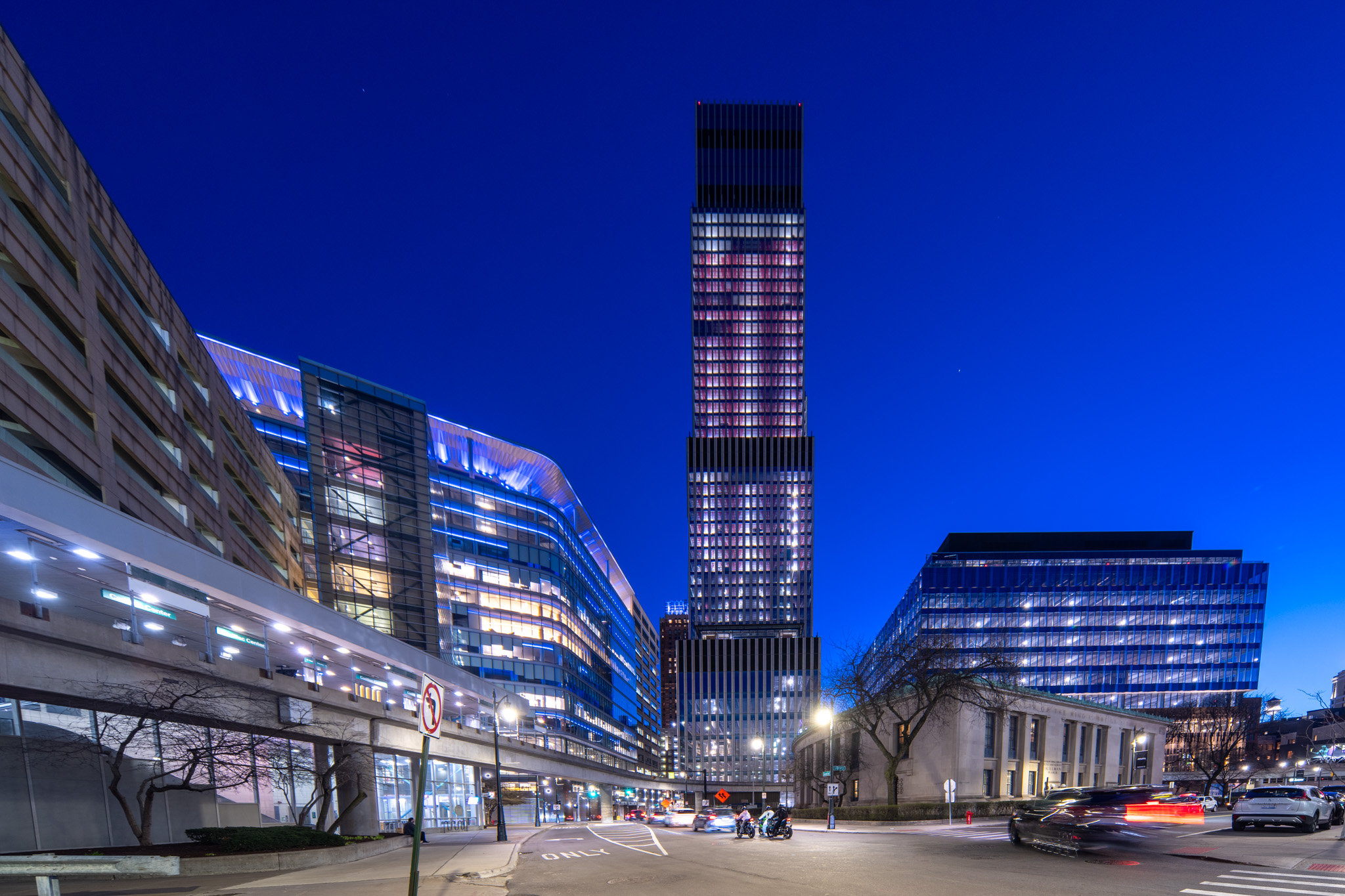
Since we're already at ground level, back up away from the People Mover station to get this photo of the Compuware Building (One Campus Martius), on the left, the Hudson Tower, center, and the Hudson Office Building, right. The key here is to bring a super-wide lens, or make a panorama if you don't have one with you.